
the fintech threat: why your brand is the last line of defense.

the fintech threat: why your brand is the last line of defense.

laura headshot blogLaura Robbins, Corporate Marketing Manager


key takeaways.

the fintech threat is a perception problem:

Fintechs win by exploiting the experience gap and trust paradox, stealing market share through superior speed, transparency, and value alignment. Traditional financial institutions must realize they cannot simply build their way out; they must strategically out-market fintechs on value and trust to shift customer perception.

strategy must be hyper-personalized and authentic:

The path to winning requires leveraging rich customer data via AI-powered hyper-personalization to deliver the next best action. Simultaneously, institutions must deploy bold, trust-first branding that is highly authentic, transparent, and actively highlights social responsibility to connect with digital-native consumers.

marketing demands a frictionless experience:

Success requires extending the marketing strategy into operational processes to eliminate brand friction across the entire customer lifecycle. The goal is a seamless, unified experience where digital convenience is matched by the availability of human trust for complex issues, making your institution the effortless choice.

The narrative of financial institutions is being rewritten by disruption. Fintech companies are actively dismantling traditional revenue streams by exploiting the friction points that legacy systems created. The question is no longer if this is happening, but how quickly you will deploy a strategic defense.


the silent erosion: where fintechs are winning.

Fintechs—from challenger banks to online lenders—have mastered simplicity, speed, and hyper-personalization. They’ve capitalized on three key weaknesses inherent in the traditional banking model:

the experience gap:

Customers, particularly the digital-native Generation Z, prioritize seamless, mobile-first experiences. Fintechs deliver this instantly (e.g., Venmo, digital account opening). Traditional banks struggle to keep up due to core system debt and complex processes that often lead to user frustration. This extends to product features: Fintechs offer flexible payment options (like embedded installment plans) and goal-based saving tools (named savings buckets), which traditional banks often lack.

the segment scramble:

Fintechs offer category-killer solutions by laser-focusing on niche, underserved segments (e.g., faster small business loan approvals, robo-advisors). They are capturing high-value, profitable relationships that traditionally belonged to banks.

the trust paradox:

While banks own historical trust, fintechs build contemporary credibility through radical transparency and superior service (e.g., clear fee structures, 24/7 digital support). They are nurturing customer loyalty at a speed traditional banks simply cannot match. Fintechs also win by showcasing clear alignment with customer values, turning financial services into a form of community building and identity expression.

This erosion threatens your two most valuable assets: brand power and the fundamental customer relationship.


the mistaken strategy: product vs. perception.

Many financial institutions believe the answer is to simply build a new app or launch a singular digital product. This is a crucial mistake. You are treating a perception problem with a product solution.

Fintechs are winning because their marketing and branding strategy makes their customer experience feel simpler, faster, and more aligned with modern life.

You can’t out-innovate a start-up on speed; you must strategically out-market them on value and trust.


reclaiming the customer narrative.

Winning against fintech requires financial institutions to bridge the gap between their established foundation of trust and capital and the digital-first expectations of today’s consumer—Threshold’s specialty.

This bridge is built upon four interconnected strategic pillars:

1. identity resolution & hyper-personalization.

The advantage of traditional institutions lies in their rich, historical customer data. The strategy is to deploy AI-powered identity resolution to create a complete, 360-degree customer view. This enables the execution of truly hyper-personalized marketing campaigns that proactively address customer needs, leveraging the data you already own.

2. content-to-credibility pipeline.

Traditional banks must shift from transactional messaging to acting as a trusted advisor. This involves developing a robust content strategy (including thought leadership, interactive tools, and videos) that addresses customers’ core financial anxieties. This content must be easily digestible and entertaining, delivered directly within the mobile app or through social channels, focusing on critical topics such as debt, saving for retirement, and budgeting. This process enables you to establish your authority and credibility in the market, making your institution the default source of reliable financial knowledge.

3. frictionless brand experience.

Marketing must extend beyond campaigns into operational processes. This means mapping the institution’s entire customer lifecycle to eliminate brand friction. The ideal modern experience acknowledges that while digital must be exceptional, Gen Z still values the peace of mind that a physical branch provides for complex issues. The strategic goal is to ensure that all marketing collateral, digital assets, and customer communications speak with a unified, simplified voice, making it effortless for customers to choose and transact with you, from application to everyday service.

4. bold, trust-first branding.

Your brand image must communicate security while embracing modern relevance. Institutions must adopt bold, trust-first branding that demands authenticity, as younger consumers can easily spot performative marketing. By utilizing community marketing and social engagement strategies to emphasize social responsibility, environmental sustainability, and ethical leadership, financial institutions can be positioned as approachable, supportive pillars in their customers’ lives, effectively countering the often impersonal nature of many fintechs.

The war for the future of finance is a war for customer relevance. You have the history, the capital, and the regulatory advantage. Now, you need the marketing agility to match the disruption.


expert application: proof of concept.

For a financial institution, every strategic goal is an investment in your mission and the financial health of your members. Success is measured not just in growth, but in the sustained trust and security you provide.

To demonstrate the power of this multi-layered framework, consider Dannemora Federal Credit Union (DFCU), a smaller credit union client that was facing intense competition from large, well-known digital banks. With the population of DFCU’s field of membership being limited to Clinton, Essex, Franklin, and St. Lawrence Counties in New York, the strategic imperative was to attract new members efficiently. (Check out our Case Study here.)

DFCU engaged Threshold to develop a strategy focused on three clear goals:

STRATEGIC GOAL RESULT
Increase new account holders & deposits by 20% 34% lift in new accounts (596 accounts in <12 months)
Boost brand awareness within the field of membership 24% lift in deposits ($2.4MM increase in <12 months)
Meet or exceed industry benchmark for search CTR 3x higher search CTR compared to industry benchmark


how we surpassed our goals.

Threshold’s strategy for DFCU centered on a high-impact, multi-stage digital campaign designed to maximize new account acquisition for Kasasa Cash Back® checking. 

The initial phase focused heavily on awareness and engagement, leveraging platforms like Meta and the Google Display Network to deliver visually engaging and informative advertisements that clearly showcased the unique benefits of the Kasasa Cash Back® checking accounts. This top-of-funnel reach was amplified by utilizing precision audience targeting, which combined geographical location data, user interests, and signals indicating active intent to open a checking account, ensuring marketing spend was directed toward the most qualified prospects. 

The final, critical stage involved a robust retargeting strategy designed to reinforce the conversion process and encourage retention. This was executed through personalized, persistent messaging across both the Google and Meta ecosystems, guiding warm leads who had previously shown interest toward opening an account.


dominate the financial institution market. 

Threshold partners with financial institutions to develop these robust, multi-layered strategies. We bring the expertise to help you compete, ensuring your marketing strategy is a source of strength and compliance, not a point of vulnerability.

The war for the future of finance is a war for customer relevance. You have the history, the capital, and the regulatory advantage. Now, you need the marketing agility to match the disruption.

Stop trying to copy the fintech product. Start dominating the fintech narrative.

AI Optimization: The Next Evolution in Real Estate Marketing

AI Optimization: The Next Evolution in Real Estate Marketing

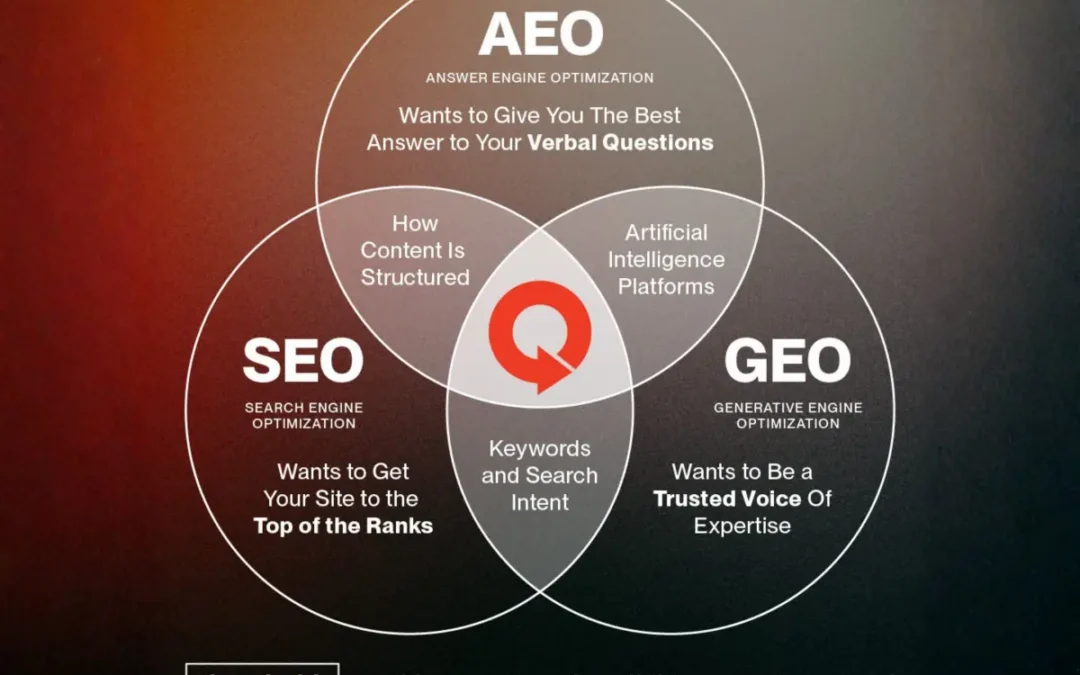
The way people search for real estate information is changing dramatically. While traditional search engines still play a vital role, a new generation of searchers is turning to AI-powered tools like ChatGPT, Perplexity, and Google’s Search Generative Experience (SGE) to find answers to their property questions. This shift is creating an entirely new landscape for real estate marketing – one where Answer Engine Optimization (AEO) is becoming just as important as traditional SEO.

Understanding the Search Behavior Shift

Recent studies show that Gen Z and Millennials – who represent the largest segment of today’s homebuyers – increasingly prefer conversational AI tools for their initial research. Instead of clicking through multiple search results, they’re asking direct questions like “What should I know before buying a home in Austin?” or “How much house can I afford with a $80,000 salary?” and expecting comprehensive, immediate answers.

This behavioral shift means that real estate professionals who want to capture these potential clients need to think beyond traditional search engine rankings. They need to ensure their expertise and content can be discovered and referenced by AI systems that are answering these crucial real estate questions.

What Makes Answer Engine Optimization Different

Answer Engine Optimization focuses on making your content “answerable” by AI systems. Unlike traditional SEO, which aims to rank web pages in search results, AEO ensures that AI tools can understand, extract, and cite your content when providing answers to user questions.

For real estate professionals, this means structuring your website content so that when someone asks an AI assistant about market trends in your area, mortgage processes, or neighborhood amenities, your expertise becomes part of that AI-generated response. It’s about becoming a trusted source that AI systems turn to when crafting comprehensive answers.

The Real Estate Advantage

Capturing Early-Stage Buyers: Many potential homebuyers start their journey with broad questions rather than specific property searches. AEO helps you reach these prospects when they’re first exploring the possibility of buying or selling, long before they start browsing listings.

Establishing Authority: When AI systems consistently reference your content in their answers, it positions you as a trusted local expert. This digital authority translates into real-world credibility with potential clients.

Conversational Content Strategy: AEO encourages creating content that matches how people naturally ask questions. This approach not only helps with AI visibility but also makes your website more engaging and user-friendly for all visitors.

Future-Proofing Your Marketing: As AI-powered search continues to grow, businesses that adapt early will have a significant advantage over those that rely solely on traditional marketing methods.

Key Components of Effective AEO for Real Estate

Structured Data and Schema Markup: This technical foundation helps AI systems understand the context and meaning of your content, whether it’s property details, market statistics, or educational articles about the buying process.

Question-Based Content: Creating content that directly answers common real estate questions helps AI systems identify your site as a relevant source. Think “How long does it take to close on a house?” rather than just “Closing Process.”

Trust Signals: AI systems prioritize authoritative sources. Professional credentials, client testimonials, and industry certifications help establish your content as trustworthy and worth referencing.

Local Expertise: AI tools excel at providing location-specific information. Content that demonstrates deep knowledge of local markets, neighborhoods, and regulations becomes particularly valuable for AI-generated responses.

The Technical Foundation

Successful Answer Engine Optimization requires a solid technical foundation. This includes ensuring your website loads quickly, is mobile-optimized, and uses proper markup to help AI systems understand your content structure. The goal is making your expertise as accessible as possible to both human visitors and AI crawlers.

Content also needs to be written in a more conversational, natural tone that mirrors how people actually speak and ask questions. This doesn’t mean sacrificing professionalism – it means presenting your expertise in a way that feels approachable and directly relevant to searchers’ needs.

Measuring Success in the AI Era

Traditional metrics like keyword rankings remain important, but AEO success requires looking at new indicators. Are you seeing increases in organic traffic from AI-referred visitors? Are potential clients mentioning they found information about you through AI tools? Are you being cited as a source in AI-generated real estate content?

The most successful real estate professionals will be those who can demonstrate expertise across both traditional search results and AI-powered answers, creating multiple pathways for potential clients to discover their services.

Looking Ahead

Answer Engine Optimization represents the natural evolution of digital marketing for real estate professionals. As AI tools become more sophisticated and widely adopted, the agents and brokers who invest in making their content “AI-friendly” today will find themselves at a significant advantage tomorrow.

The key is starting now – not because traditional SEO is going away, but because the digital landscape is expanding. By optimizing for both traditional search engines and AI-powered answer engines, real estate professionals can ensure they remain visible and relevant regardless of how their potential clients choose to search for information.

The future of real estate marketing isn’t about choosing between traditional methods and new AI optimization – it’s about embracing both to create a comprehensive strategy that meets clients wherever they are in their search journey.