
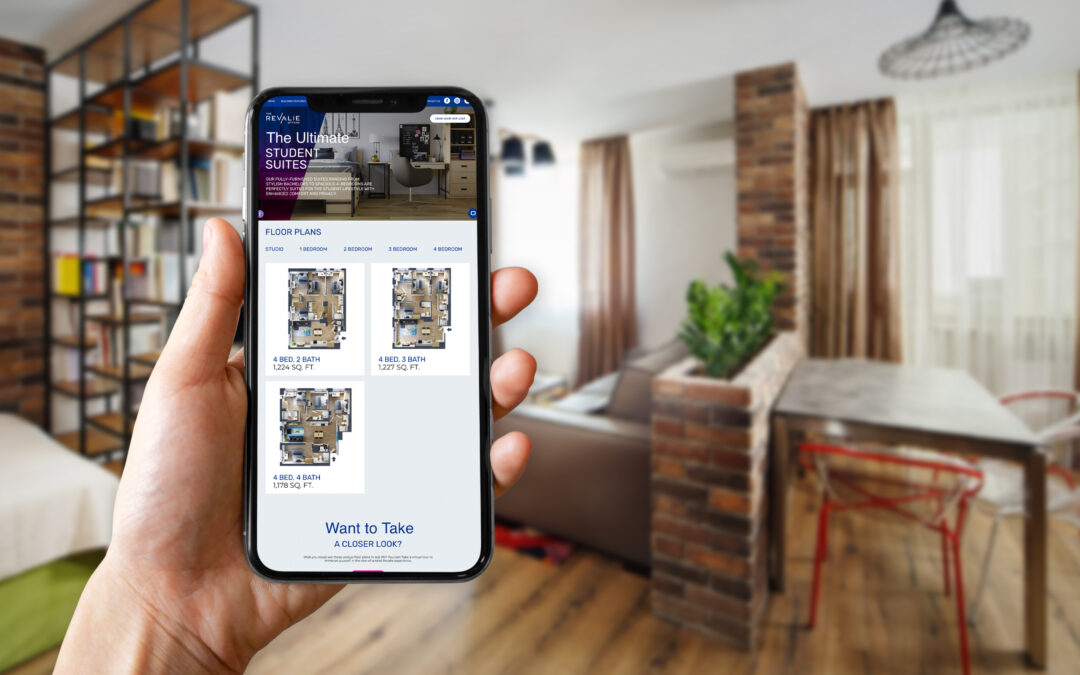
How Floor Plan Graphics Can Make or Break Your Digital Real Estate Marketing Results
Floor plans: every apartment marketing team needs them, but how important are they really? You might be surprised at how big a role floor plan graphics have to play in your digital real estate marketing strategy. Not only can a lack of floor plan graphics result in poor UX on your website, but it can also rob you of key branding and marketing opportunities that help drive qualified leads and conversions.
Here are some of the key ways floor plan images can make or break your digital real estate marketing results.
Prospects Refine Their Apartment Search Based on Floor Plans
Keyword research shows that, no matter what your market or your target audience is, people are searching specifically for floor plans based on the number of bedrooms. It’s part of what makes ILS platforms like Zillow and ApartmentFinder so popular; users can refine their search by the number of bedrooms and bathrooms. But when they take their search to Google, they refine their search manually by typing in search terms like “3-bedroom apartments in Austin” or “studio apartments Austin.”

These search habits have a lot to teach us about user intent: from the very beginning of their apartment search, the number of bedrooms is central to their housing decision. When a prospect encounters difficulty in gathering detailed floor plan information about your property, they’re that much more likely to bounce from your website or disqualify your property as they move into the consideration phase of the digital renter’s journey.
And the more information prospects can learn from these floor plans, the more likely they are to recognize your property as a viable option and take the next step by scheduling a tour or starting an application. In other words, 3-D floor plans, floor plans with dimensions, and higher-resolution floor plan graphics help result in more qualified leads coming in through your web presence.
Floor Plan Images Can Be Used Throughout Your Digital Real Estate Marketing
Floor plans aren’t just for your brochure or your website (although you should definitely use them there!). Floor plan images also provide fodder for additional digital marketing platforms like Google My Business posts, social media posts, and ad images or video. And the higher quality these floor plans are, the more versatile they will be.
Say, for example, that one of your floor plans has a high vacancy rate while others are sold out. Having high quality floor plan images means you can easily promote that specific floor plan through your posts and stories on Instagram and Facebook. You could also run an ad campaign featuring the floor plan graphic alongside interior photos or renderings. Carousel ads and video ads work particularly well for this purpose.
Floor Plans and Site Plans Add Branding Opportunities
Floor plans aren’t just a convenient way to convey information. They’re also an opportunity to show users that you’re committed to providing a positive user experience, which also signals that they can expect a positive renter experience at your community. Plus, floor plans and site plans can be used in creative ways to highlight your brand personality. Doing so ensures that your units don’t blend in among all your competitors offering similar unit types.

Everything from brand colors and patterns to unique messaging can be added to your floor plan design. You could show off your branding through the floor plan design itself or by adding a branded border or background. You could even implement a unique hover state on each floor plan image on your website, if you have the ability to do so. Whatever tactic you choose, the more you can signal that your apartments are unique to your community, the more likely it is that your prospects will pay attention and eventually reach out to schedule a tour or start an application.
High-Quality Floor Plans Signal Modernity and Reliability
Not all floor plan graphics are created equal. A low-quality, low-detail floor plan image can be almost as bad as no floor plan at all. Your floor plan images should be accurate to scale, have good color contrast (which is particularly essential for prospects with color blindness or other vision impairments), and match the look-and-feel of your brand. If they feature easy-to-read dimensions, room labels, and amenity labels for sought-out features like in-unit washer and dryer and walk-in closets, that’s even better. Best of all, 3-D floor plans help bring your apartments to life complete with interior design elements and a clearer sense of scale for the viewer.

For the sake of argument, let’s compare the two floor plan images above. While the 3-D floor plan on the right does not include labels or dimensions, it still does a much better job of portraying the scale, features, and personality of the one-bedroom apartment it represents. A user viewing this floor plan can imagine themselves living there and feels confident that the unit comes with the amenities that are important to them, since they are clearly visible in the image. Meanwhile, floor plans like the one of the left don’t inspire much confidence in the user viewing them. Why? Not only does it lack detailed labels or dimensions, it also makes it challenging for the viewer to understand how large each room will feel, how modern the unit is, and what amenities it has. The apartment on the left could be fantastic, but it comes across as lackluster and illegible, making it less likely that a user will continue exploring this community for long enough to fall in love.
Those are just some of the key ways that floor plan graphics can make or break your digital real estate marketing results. For more information on how you can improve your digital marketing results, check out our post on How To Improve UX on Your Property Website (and increase conversions) or take a scroll through the Digital Buyer’s Journey For Real Estate.