delivering exceptional digital marketing results.

delivering exceptional digital marketing results.

a case study in real estate marketing.

Real estate marketing is one of the most competitive environments in digital advertising today. Rising cost-per-click, crowded search results, and aggressive local competition make it increasingly difficult for real estate teams to generate consistent, cost-effective leads.

Simply running ads isn’t enough. To succeed, paid media must do more than generate traffic — it must deliver measurable growth while improving marketing efficiency.

At Threshold, we build scalable digital growth engines designed to outperform industry benchmarks across every key paid media metric.

Because average performance isn’t good enough.


the challenge.

Real estate teams face constant pressure to generate high-quality leads while keeping advertising costs under control.

Increasing competition across Google Search and social platforms means that many advertisers struggle to maintain performance as costs rise and engagement declines.

The goal of this campaign was clear:

  • Increase engagement with prospective buyers and sellers
  • Improve conversion efficiency across paid media campaigns
  • Reduce overall cost-per-acquisition
  • Consistently outperform industry benchmarks


we don’t do average.

We recently analyzed performance across our portfolio, and the results were hard to ignore. In January 2026 alone, our digital campaigns significantly outperformed industry benchmarks.

By combining strategic audience targeting, compelling creative, advanced bid management, and ongoing campaign optimization, we generated:

  • More qualified clicks
  • Higher conversion efficiency
    Significantly lower acquisition costs

The result is a marketing engine that drives stronger performance while maximizing advertising efficiency.


the results.

google search campaign performance.

Compared to industry benchmarks, the campaign delivered exceptional improvements across all major metrics.

  • 58% higher click-through rate (CTR)
  • 75% higher conversion rate (CR)
  • 43% lower cost-per-click (CPC)
  • 77% lower cost-per-acquisition (CPA)

Higher engagement and stronger conversion performance mean that more high-intent prospects are interacting with property listings and marketing content, while overall advertising costs continue to decline.


meta (paid social) campaign performance.

The campaign also delivered significant gains across Meta’s paid social platform.

  • 76% higher click-through rate
  • 88% lower cost-per-click

Lower traffic costs, combined with stronger engagement, allow campaigns to reach more potential buyers and sellers without increasing spend, expanding the sales pipeline while maintaining efficiency.


google premier partner recognition.

Threshold was once again awarded Google Premier Partner Status, the highest and most exclusive tier within the Google Partners program.

This distinction is awarded annually to the top 3% of participating digital marketing agencies, recognizing advanced Google Ads expertise and exceptional client performance.

For our clients, this means working with a team that has proven capabilities in driving measurable results across paid media campaigns.


the bottom line.

These results aren’t incremental improvements.

They’re decisive performance gains.

When strategy, creative, targeting, and bid management align, real estate marketers don’t just compete — they outperform.

The right digital strategy transforms paid media from a cost center into a scalable lead generation engine.


ready to discover your growth opportunity?

Let Threshold uncover the growth potential for your brand and business. 

the real reason your digital marketing underperforms. and a worksheet to fix it.

the real reason your digital marketing underperforms. and a worksheet to fix it.

laura headshot blogLaura Robbins, Corporate Marketing Manager


key takeaways.

  • digital marketing underperforms when SEO, paid media, content, and conversion are not aligned as a single strategy
  • websites directly impact search visibility, paid media performance, and conversion rates
  • channel-level optimization fails without shared goals and performance measurement
  • meaningful results come from system-level digital marketing optimization tied directly to ROI
  • in crowded industries like real estate and financial services, messaging must reduce friction, not reinforce category sameness

Digital marketing is everywhere.

Brands are running paid search campaigns, launching paid social ads, building content calendars, optimizing SEO, and automating email journeys.

And yet, your performance keeps stalling.

Leads plateau. Cost per acquisition rises. Traffic increases without meaningful growth.

The issue isn’t the effort you’re putting in. It’s the structure you’re following.
 

activity isn’t the same as performance.

Most digital strategies start with a channel plan:

  • paid search drives traffic
  • social builds awareness
  • content improves visibility
  • email nurtures engagement

But when these tactics operate in isolation, you get motion, not momentum. 

Paid campaigns can deliver clicks. But if your website doesn’t convert, those clicks disappear.

SEO can drive organic traffic. But if messaging mirrors the category narrative, visitors don’t feel compelled to act.

Social can build engagement. But without clear next steps, it doesn’t drive revenue.

Disconnected channels create disconnected results. Ain’t nobody got time for that. 
 

the hidden bottleneck? no system-level thinking

Digital marketing underperforms when it’s treated as a collection of tactics instead of a performance system.

High-performing strategies do something different. They align every channel—paid, organic, content, and website—around shared business goals.

Not impressions. Not clicks. Not “engagement.” Actual growth.

Here’s where most strategies break down:
 

1. campaigns are built in isolation.

Paid media, SEO, content, and conversion strategy often live in separate lanes. When each team optimizes independently, no one owns the system.
 

2. optimization happens too late.

Optimization shouldn’t be a post-launch adjustment. It should be continuous, refining creative, messaging, targeting, and landing pages based on real performance data.
 

3. measurement focuses on vanity metrics.

Impressions and clicks feel productive. But revenue, cost per acquisition, conversion rates, and lifetime value determine success.

Without shared metrics tied to business outcomes, digital becomes noise.
 

friction is the real enemy.

In crowded industries like real estate and financial institutions, the problem compounds.

Every multifamily property highlights amenities.
Every senior living community emphasizes care.
Every bank promotes service and rates.

When messaging reinforces the category’s default narrative, you create comparison, not clarity.

And clarity drives conversion.

For multifamily, the real friction is decision fatigue.
For senior living, it’s emotional reassurance.
For financial institutions, it’s a lifecycle friction between digital convenience and human trust.

If your digital marketing doesn’t reduce that friction at every stage—ad, click, landing page, follow-up—your performance will continue to suffer.
 

what our high-performing digital systems do differently.

They operate as a unified engine.

  • data drives every decision. Strategy is informed by analytics, not assumptions
  • channels are coordinated. SEO, paid search, social, and content work together to reduce waste and increase ROI
  • websites are built to convert. Messaging, UX, and calls to action align with campaign intent
  • optimization is continuous. Creative, targeting, and landing pages evolve based on measurable performance
  • metrics tie back to growth. Not just traffic, but also qualified leads, revenue impact, and cost-efficient acquisition

This is system-level digital marketing. And trust us, it performs.
 

your digital marketing reframe worksheet.

A practical exercise for real estate and financial institutions

If your digital marketing feels busy but not effective, this worksheet will help you diagnose where performance is breaking down and how you can fix it.

Work through this with your team. Be honest. The clarity often reveals itself quickly.
 

step 1: define the category’s default problem.

Every industry comes with assumptions.

What does your category assume everyone cares about?

  • multifamily → Amenities and lifestyle
  • senior living → Compassion and care
  • financial institutions → Rates and service

Now ask: What problem does your industry say it solves?
 

step 2: surface the deeper friction.

The surface problem is rarely the real one.

What emotional or operational tension actually slows decisions?

Examples:

  • multifamily → Decision fatigue, too many options
  • senior living → Family reassurance before commitment
  • financial institutions → Friction between digital convenience and human trust

Now ask: What tension actually causes hesitation for your audience?
 

step 3: identify where the industry falls short.

Most digital marketing mirrors the category narrative.

That’s where performance stalls.

Ask:

  • are we listing features instead of reducing friction?
  • are we generating traffic without guiding decisions?
  • are paid, SEO, and website messaging aligned?
  • are we measuring clicks instead of business outcomes?

Now define: Where does your current strategy reinforce sameness instead of clarity?
 

step 4: define the problem only you solve.

This is where positioning shifts.

Instead of competing inside the category frame, define the problem your organization is uniquely built to solve.

Examples:

  • multifamily → “We simplify the leasing journey.”
  • senior living → “We create reassurance before the tour.”
  • financial institutions → “We eliminate friction across the customer lifecycle.”

Now define: What problem are you truly built to solve, and how should that reshape your messaging, website, and campaigns?
 

step 5: align the system.

Now pressure-test your digital strategy.

Does your:

  • paid media reflect this new positioning?
  • SEO strategy reinforce this narrative?
  • website guide users clearly toward conversion?
  • measurement track outcomes tied to ROI?

If the answer isn’t clearly “yes,” you’ve found the gap.

Digital marketing underperforms when channels operate in isolation. It performs when messaging, media, and measurement align around the same friction point.


fix the system, not the symptoms.

Digital marketing won’t improve because you increase the budget.

It improves when you:

  • think systemically, not tactically
  • align messaging with real audience friction
  • tie every channel to measurable business outcomes
  • build optimization into the foundation — not the follow-up

That’s the difference between activity and acceleration.

If your digital strategy feels like a collection of disconnected tactics instead of a coordinated growth engine, it may be time to rethink the structure.
 

ready to build a performance system?

At Threshold, we design digital marketing strategies that align messaging, media, and measurement into one cohesive performance system.

Because measurable marketing doesn’t just look good, it exceeds the standard.

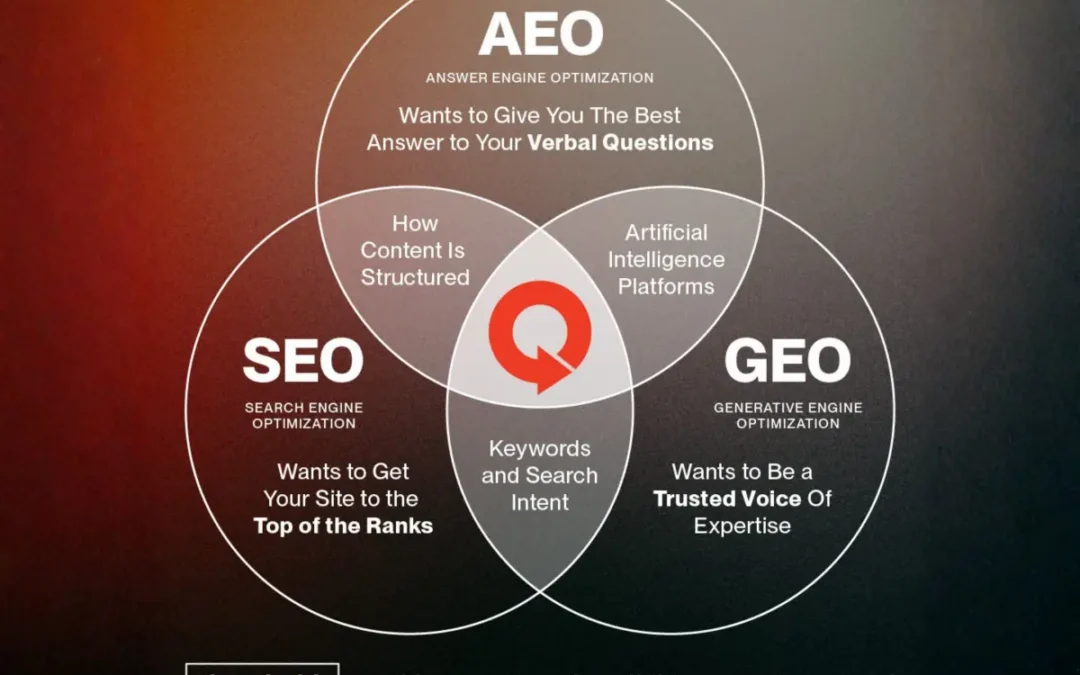
why aio, geo, and seo still matter in a next gen stack.

why aio, geo, and seo still matter in a next gen stack.

With new tools launching every week, it is tempting to chase whatever is most hyped. The reality is that emerging tech doesn’t replace your foundational strategy. It multiplies it.

Three pillars matter more than ever in an AI-first landscape: AIO, GEO, and SEO.

Say what?

1. aio – ai optimized content.

Large language models and AI assistants are quickly becoming default gateways to information. If your content is not structured in a way that AI can interpret, it will not recommend you, no matter how good it is.

AI optimized content looks like:

  • Clear headings that signal what each section is about.
  • Plain language explanations instead of dense jargon.
  • Strong FAQs that mirror real questions your buyers ask.
  • Structured data and schema that tag locations, services, events, and reviews.

You’re no longer just writing for people reading your site. You’re also writing for AI systems that summarize, rank, and route those answers to your audience across search and chat. 

2. geo – local and contextual relevance.

For property brands and local service businesses, location isn’t a minor detail. It is a primary filter.

A strong GEO strategy ensures that:

  • Your properties, branches, or locations show up accurately in local search and map results.
  • Content speaks to neighborhood context, local regulations, and micro market nuances.
  • AI tools that rely on local data see you as a credible nearby option.

This is especially critical for real estate, student housing, and financial institutions where proximity and community ties strongly influence consumer decisions.

3. seo – in an ai search world.

SEO is not “dead.” It is changing shape.

As AI-powered answer engines pull from a smaller set of authoritative sources, you want to be:

  • The clearest explainer on your core topics.
  • The most useful resource for journey-level questions, not just keywords.
  • The site with clean technical hygiene so search bots and AI tools can actually parse and trust your content.

Think of this as Search + AI Readiness. You’re still aiming to rank, but you’re also aiming to be the brand that algorithms choose when they generate answers for your audience.

how these pillars work together.

When AIO, GEO, and SEO are aligned:

  1. AI can understand what you do, where you are, and who you serve.
  2. Search engines can confidently surface your content across traditional and AI views.
  3. Humans find experiences that feel both relevant and trustworthy.

New tools will keep emerging. These three pillars make sure that no matter how the interface shifts, your brand remains visible, understandable, and compelling.

Let us do all this heavy lifting for you, optimizing your site for this new digital age with our AI optimization services.

website innovation guide: why keeping your website current is critical. a case study.

website innovation guide: why keeping your website current is critical. a case study.

laura headshot blogLaura Robbins, Corporate Marketing Manager


Ditch the idea that your website is a sleepy expense. Think of it as your 24/7 digital sales machine and your most valuable secret weapon. 

Yet, many businesses treat it as a static property, accepting the invisible decay of performance, security, and user experience. Stagnation is fiscally irresponsible. Continuous website innovation is the single most effective way to secure your growth and guarantee your digital relevance.

Here’s the proof.
 

key takeaways.

  • A website that isn’t continuously updated loses conversions, visibility, and trust over time.
  • Website speed directly affects conversion rates, bounce rates, and search rankings.
  • Outdated websites significantly increase security and financial risk.
  • Flexible website systems outperform rigid templates in engagement and conversion.
  • Improving engagement and goal completion turns websites into measurable growth assets.
  • Continuous website innovation is more cost-effective than periodic full rebuilds.


the financial fallout of stagnation.

The cost of a neglected website is quantifiable, manifesting as lost revenue and escalating risk. These industry statistics are your warning signal:
 

1. the cost of slow performance.

The modern user has zero patience. The moment your site exceeds the two-second mark, you are bleeding traffic and profit. We don’t know about you, but two seconds seem to pass quickly. 

  • conversion crisis: A one-second delay in mobile load times can impact conversion rates by up to 20%. For B2B sites, a site loading in 1 second has a conversion rate 3 times higher than a site that loads in 5 seconds. Yowza.
  • bounce rate penalty: The probability of a user immediately abandoning your site (bouncing) increases by 32% as page load time goes from 1 second to 3 seconds.
  • seo failure: The average page speed of a first-page Google result is 1.65 seconds. If your site is slower, you are actively choosing to rank lower than your competitors. Nobody wants that.
  •  

    2. the catastrophic security risk.

    Yes, we said catastrophic. Hear us out. An outdated website is a liability waiting to happen. Unpatched, legacy platforms are prime targets, making a security breach a matter of when, not if.

    Property websites often integrate with leasing platforms, CRMs, payment portals, and third-party plugins. When those sites run on legacy systems or unpatched software, they become an easy entry point for attackers — putting resident data, payment information, and operational systems at risk. A single breach can impact multiple properties at once, triggering downtime, lost leasing momentum, remediation costs, and long-term damage to brand trust across an entire portfolio.

    For financial institutions, the stakes are even higher. Outdated web infrastructure exposes sensitive customer data and creates compliance risks across regulations such as GLBA, PCI-DSS, and FFIEC guidelines. A breach doesn’t just carry financial consequences — it can result in regulatory scrutiny, mandatory disclosures, reputational harm, and erosion of member trust that takes years to rebuild.
     

    3. the financial reality.

    • The global average cost of a data breach is $4.44 million, climbing to $10.22 million for U.S. organizations—figures that can be devastating for mid-market operators and community institutions.
    • Legacy platforms and outdated plugins are the most common attack vectors, often exploited simply because patches and updates were delayed or impossible to deploy quickly.
    • For smaller organizations, recovery costs typically range from $120,000 to $1.24 million, excluding lost business, operational disruption, or reputational fallout—a burden that can hinder growth or threaten long-term viability.

    In both industries, the takeaway is clear: security isn’t a one-time project. It’s the byproduct of a modern, well-maintained website ecosystem 
     

    case study: from stagnant to scalable with peakmade.

    What good is all this data? Here’s a real-world example of a Threshold client whose digital presence was limiting growth—not because of a lack of effort, but because the website itself had become a bottleneck.

    PeakMade, a multifamily real estate investment and management company, managed a portfolio of property websites that were functional but inflexible. Built on templated systems, these sites weren’t optimized to adapt, engage, or convert at scale. Threshold didn’t just redesign with nicer visuals — we focused on the core performance signals that actually drive business outcomes.
     

    before.

    PeakMade’s property websites relied on standardized templates that offered little room for optimization. Engagement plateaued, visitors didn’t linger, and the number of sessions was too few to result in meaningful actions. While the sites technically “worked,” they weren’t working hard enough for the business.
     

    after.

    We designed a flexible and scalable website system for PeakMade, aligning UX, content structure, and performance optimization across their entire portfolio. The result was a clear shift in how users interacted with the sites and how effectively those interactions translated into business value.

website innovation
METRIC INNOVATIVE WEBSITE PERFORMANCE BUSINESS IMPACT
Average Time on Site +33 seconds Visitors spent more time exploring listings and content, indicating stronger engagement and intent.
Engagement Rate +7.74% Increased interaction across pages signaled a more intuitive, compelling experience.
Goal Conversion Rate +77.61% Significantly more visitors completed key actions, directly increasing the effectiveness of marketing and leasing efforts.
Portfolio Scalability Unified, flexible system Teams gained the ability to improve and evolve sites without rebuilding from scratch.


Using the Entrata designs and limited plugins was costing PeakMade properties conversions. By working in conjunction with Threshold, these four website templates not only look better than the previous property websites, but they also provide a much-improved user experience that consistently results in better website engagement and higher lease numbers.


your website cannot wait.

The case of PeakMade is a vivid reminder: Your website is a competitive tool. The longer you wait to innovate, the more expensive the catch-up will be, and the more market share you will surrender to competitors who prioritize continuous improvement.

Stop viewing your website as a fixed asset. Start treating it as a dynamic, high-yield investment.

designing a refined digital experience: the case study.

designing a refined digital experience: the case study.

When Deborah Hayes Advertising came to Threshold, the brief was clear: design a website for Maxwell Downtown Brooklyn that feels as refined and intentional as the building itself. Maxwell is a 40-story boutique-inspired residential tower in the heart of Brooklyn, where modern living blends creativity, community, and ease. The website needed to reflect that ethos while driving engagement and conversions.

the problem.

Luxury residential websites often feel corporate, overly dense, or disconnected from the lifestyle they promise. Maxwell required something different: a digital presence that feels curated rather than commercial, sophisticated without being stiff, and elevated yet approachable. The challenge was balancing strong visual storytelling with clarity, usability, and leasing performance across devices.

the dream.

We envisioned a website that doesn’t just show Maxwell’s lifestyle—it feels like it. Elegant without excess. Intentional without artifice. Distinctly Brooklyn. The goal was to translate Maxwell’s identity into a calm, editorial digital experience that invites exploration and mirrors the residence’s quiet confidence.

the strategy.

website design.

The visual concept was inspired by effortless sophistication—timeless, confident, and approachable. This guided a restrained visual language rooted in refined typography, a carefully curated color palette, and art-forward photography. Content pacing and generous white space allow the site to breathe, creating a calm browsing experience that reflects the building’s design sensibility.

website development.

User experience guided every technical decision. Clean navigation and a clear content hierarchy help visitors move seamlessly from residences to amenities to lifestyle storytelling. The responsive framework ensures a cohesive experience on desktop, tablet, and mobile. Interactive features—including an embedded virtual tour, refined animations, and real-time pricing and availability—engage visitors while maintaining simplicity. Strategically placed calls to action, such as Schedule a Tour and View Availability, support conversion goals and connect directly to the leasing process.

the results.

Maxwell Downtown Brooklyn Website Mockup Laptop

The Maxwell Downtown Brooklyn website delivers a sophisticated, user-first digital presence that reflects contemporary urban living—where modern luxury meets creativity, community, and ease. A strong conceptual foundation and meticulous execution elevate the brand while remaining intuitive and performance-driven. The work was recognized with a Gold Davey Award for Website Design, celebrating excellence in digital storytelling and user experience.

Read the full Maxwell Downtown Brooklyn website Case Study. 

more coffee, less clicks: a guide to marketing automation.

more coffee, less clicks: a guide to marketing automation.

laura headshot blogLaura Robbins, Corporate Marketing Manager


key takeaways.

  • Marketing automation should reduce manual work, not add complexity.
  • Automating broken processes scales inefficiency instead of fixing it.
  • Effective automation is behavior-driven, system-level, and outcome-focused.
    Fewer clicks lead to faster execution, clearer insights, and better performance.
  • The goal of automation is momentum — not volume.


marketing automation should reduce work, not add complexity.

Marketing teams aren’t short on tools. They’re short on time.

Between launching campaigns, pulling reports, responding to leads, and manually updating systems, many teams spend more time operating marketing than improving it.

Marketing automation is supposed to help. But too often it does the opposite.

Instead of simplifying work, automation stacks add complexity—more platforms to log into, more rules to maintain, more dashboards to check. The promise of efficiency turns into another layer of friction.

This guide exists to reset that narrative.

Marketing automation isn’t about doing more. It’s about doing less—on purpose.


what marketing automation really means for modern marketing teams.

A lot of people treat automation like a magic button that replaces thinking with software.

Spoiler: It doesn’t.

Effective automation doesn’t remove humans from the process—it removes repetitive work so teams can focus on strategy, creativity, and decision-making.

Automation isn’t:

  • Sending more emails
  • Adding endless workflows
  • Chasing personalization just for the sake of it

Automation is:

  • Cutting out manual steps
  • Creating consistency across touchpoints
  • Triggering actions based on real behavior
  • Scaling what already works

The goal isn’t volume. It’s efficiency and clarity.


why manual marketing processes slow performance and growth.

Every manual step slows things down:

  • Logging into multiple platforms
  • Copying data between tools
  • Manually segmenting lists
  • Triggering campaigns by hand
  • Pulling reports instead of acting on them

Each click costs time. Each decision introduces friction. And over time, this adds up, slowing campaigns, draining teams, and weakening performance.

Smart marketing automation removes these bottlenecks.

Fewer clicks.
Faster execution.
Better outcomes.

That’s the kind of automation worth investing in.


why marketing automation fails without a clear strategy.

One of the biggest mistakes teams make is automating processes that are already broken.

Automation doesn’t fix strategy. It scales it.

Before building workflows, ask:

  • What actions actually drive results?
  • Where are we repeating work needlessly?
  • Which moments truly matter to our audience?

Only once the strategy is clear does automation become an amplifier of performance, not a band-aid for inefficiency.

The best automation systems feel invisible. They don’t add noise—they remove it.


the core elements of effective marketing automation systems.

Effective automation systems have a few traits in common:

  1. They’re behavior-driven
    Workflows respond to real user actions, not arbitrary schedules.
  2. They’re channel-agnostic
    Email, paid media, websites, and CRM all work as one system, not separate parts.
  3. They prioritize clarity over complexity
    Simple, purposeful automation beats elaborate, hard-to-maintain flows.
  4. They reduce decision fatigue
    The system takes care of routine execution so teams can focus on growth.

Good automation feels like a quiet assistant, not another job on your to-do list.


how marketing automation improves speed, consistency, and results.

When automation is done right:

  • Campaigns launch faster
  • Leads are routed automatically
  • Follow-ups happen without reminders
  • Reporting surfaces insights immediately

Teams spend less time navigating tools and more time thinking, creating, and improving.

That’s the return on automation. Not just efficiency. But momentum.


how to build marketing automation systems that scale performance

Consider automation as a system design problem, not a feature set.

Here’s a simple framework you can start with:


build marketing automation that scales. Automation is a system design problem, not a feature set. (3) (1)

step 1 — audit processes.

Map out every manual task your team does regularly:

  • What gets repeated most?
  • What causes delays?
  • Where do fixes happen manually?


step 2 — identify high-value automation opportunities.

Prioritize tasks that:

  • Occur often
  • Consume significant time
  • Affect outcomes directly. Examples include lead follow-ups, segmentation updates, and behavioral triggers.


step 3 — define triggers and actions.

For each workflow:

  • Trigger: What must happen?
  • Action: What should the system do?
  • Goal: What metric does it improve?


step 4 — build, test, refine.

Start with simple automation, measure impact, and refine:

  • Are leads moving faster through the funnel?
  • Has manual work decreased?
  • Are conversions improving?

Iterate based on real performance data.


step 5 — align channels.

Ensure automation isn’t confined to one silo:

  • Email automation feeds into paid media strategies
  • Website behavior triggers CRM workflows
  • Analytics inform automated optimization
    This creates a connected marketing system, not isolated patches.


the future of marketing isn’t more tools, it’s smarter systems.

The most effective automation systems aren’t built overnight. They evolve through iteration, clarity, and measurable outcomes.

This guide has shown you:

  • What automation truly means
  • Why too many clicks kill momentum
  • How strategy enables scalable automation
  • The core traits of effective systems
  • A practical framework you can use today

The future of marketing isn’t about more tools. It’s about smarter systems. And ideally, more coffee.