
by threshold | Jul 15, 2026 | AI, AI Marketing, Digital Marketing
Let’s be honest for a second. When was the last time you actually scrolled past the top of a Google search page? Better yet, when was the last time you didn’t just read the paragraph-style answer summary at the very top and close the tab completely?
Welcome to the era of the Zero-Click Search.
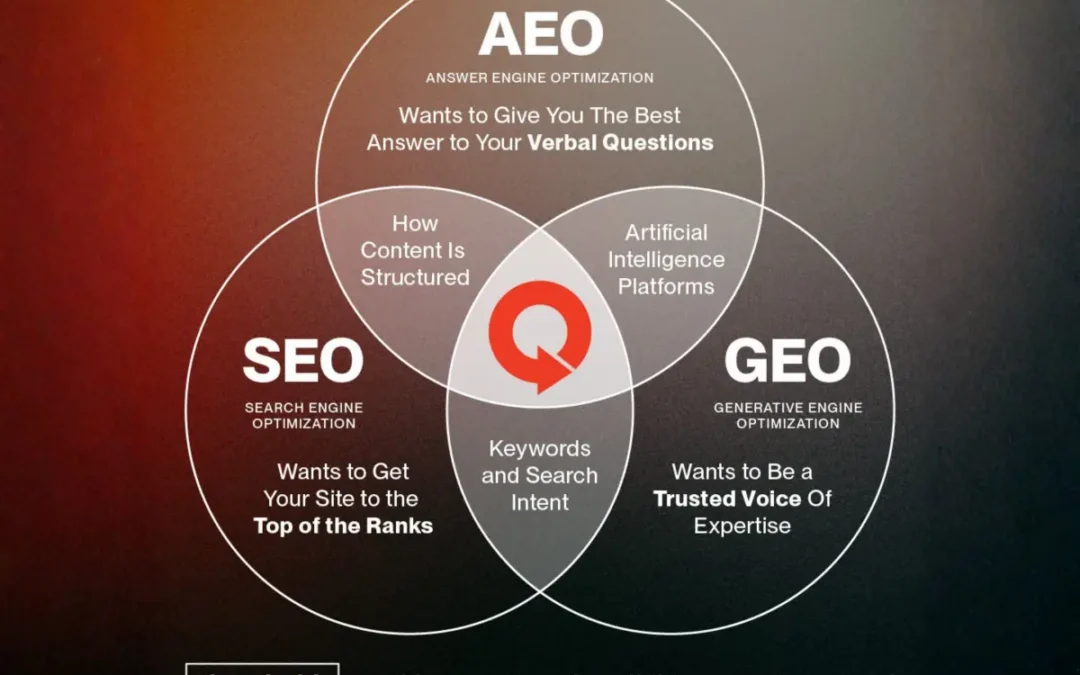
With the rapid emergence of Answer Engines like ChatGPT, Perplexity, Gemini, and Google’s native AI Overviews, the way people discover brands has fundamentally transformed. Traditional SEO used to be about winning the battle of the “blue links.” Today, it’s about winning the battle of AI extraction. If an AI engine doesn’t instantly find, cross-reference, and trust your website’s data, your brand is eliminated from the consideration pool before a prospect ever even visits your site.
When our enterprise student housing client, Yugo, realized their audience of digital-native students was moving away from standard search bars and toward AI prompt boxes, they didn’t panic. They teamed up with Threshold to launch a massive, multi-platform Generative Engine Optimization (GEO/AIO) initiative across more than 50 concurrent campaigns.
The mission? Move Yugo beyond static rankings and drop them right into conversational AI recommendations.
Here’s exactly what went down, what we achieved, and why your brand needs to adapt to AEO before it gets left behind.
the strategy: coding for the AI brain.
AI models don’t fall for flashy, vague marketing copy. They operate entirely on Information Gain and Topical Authority. They scan the web for data-dense, cleanly structured, hyper-reliable facts that make it easy for them to form an answer for a user.
To get Yugo noticed, the Threshold activation team restructured its digital asset architecture. We targeted conversational, high-intent user queries (like “best budget-friendly student housing near UT Austin” or “local travel guides for students moving to Madrid”). By organizing content into “chunkable,” authoritative answers and backing them with deep technical schema coding, we gave the AI bots exactly what they were looking for.
the results: dominating the share of voice.
The first 90 days of onboarding and implementation proved that when you optimize for AI logic, the search engines reward you instantly. Here is a look at the hard numbers from the phase one rollout:
-
1,200+ Documented AI Mentions: Yugo achieved rapid, widespread visibility and brand authority across the major conversational search ecosystems.
-
8 High-Value Direct Citations: Instead of guessing, major AI search experiences cited Yugo directly inside responses, inserting clickable links straight back to Yugo’s site.
-
Algorithmic Diversification: We secured concurrent, rising visibility across AI Overview, AI Mode, ChatGPT, Gemini, and Perplexity—ensuring Yugo is protected against sudden platform algorithm updates.
-
Total Topic Ownership: Yugo successfully commanded the conversation where it mattered most, capturing an elite 0.35% presence in core Student Housing Search and a dominant 0.09% presence in City Travel Guides (beating out legacy global platforms).
-
10.9K Inbound Traffic Multiplier: This top-of-funnel AI authority successfully fueled 10.9K organic monthly sessions, driven by 27.2K ranking keywords and 1.6K referring domains.
the big takeaway: AI visibility = real business pipeline.
At Threshold, we don’t believe in vanity metrics. Brand mentions inside ChatGPT look great on a slide deck, but do they actually do anything for business growth?
Absolutely.
By mapping this initiative out, we proved a direct correlation across the modern conversion funnel:
AI Visibility (1,200+ Mentions)⟶High-Intent Organic Traffic⟶Qualified Leads⟶Closed Revenue
When an AI engine recommends a brand, it bypasses the middleman of traditional multi-page aggregators or forums. The AI essentially acts as a trusted peer review. By the time a student or a parent clicks through a direct citation link to Yugo’s property pages, they are already highly educated, pre-vetted, and primed to convert into a lease.
is your site ready for the future of search?
The digital landscape is shifting right under our feet. If your current marketing strategy is strictly relying on 2018-era keyword stuffing, you’re missing the audience that has already transitioned to conversational search.
Want to check if your brand is accidentally blocking AI crawlers, or ready to turn your website into an AI-extraction magnet? Let’s chat about your custom AEO strategy today.
by threshold | Jun 3, 2026 | AI Marketing, Tech/Web, Thought Leadership
 Laura Robbins, Corporate Marketing Manager
For two decades, the playbook for digital visibility was simple, predictable, and linear. You identified a high-volume keyword, engineered a piece of content around it, built a network of backlinks, and climbed the search engine results page (SERP). Success was binary: you were either on page one, or you were invisible. The ultimate trophy was the “number one ranking.”
But the ground has shifted. The rise of Artificial Intelligence Overviews (AIO), generative search, and answer engines has turned the traditional SERP into a relic of the past.
When a user asks a complex question today, they are no longer greeted merely by a list of ten blue links. They receive a synthesized, comprehensive answer generated in real-time. If your digital strategy is still hyper-focused on traditional “ranking,” you are optimizing for a landscape that is rapidly disappearing.
To lead in this new era, executives must shift their perspective from winning a rank to winning the answer.
the great shift: from keywords to trust and context.
Traditional search rewarded optimization. Generative AI rewards clarity, structure, and trust.
In the keyword era, search engines acted as indexers, matching a user’s typed phrase to the most relevant documents. In the AI era, search models act as researchers and synthesizers. They don’t just look for pages that mention a topic; they evaluate pages that understand it.
This evolution fundamentally changes what it takes to be visible:
-
from keywords to conceptual clarity: Shoving exact-match phrases into headers is no longer effective. AI engines understand semantic intent. They parse content to see if it actually resolves a user’s friction. If your content lacks depth or fails to articulate a clear point of view, it will be bypassed, regardless of how many keywords are present.
-
from formatting to technical structure: AI models consume information at scale, but they rely heavily on clean, logical infrastructure. Schema markup, conversational formatting, intuitive site hierarchy, and clear Q&A data are no longer “technical SEO” afterthoughts—they are the prerequisite format for how AI reads your brand.
-
from traffic generation to radical trust: Because AI engines synthesize information from multiple sources, they prioritize authority and accuracy over mere volume. For highly regulated or high-stakes industries, building digital trust through verifiable data, transparent authorship, and unwavering topical authority is the only currency that matters.
what’s changing (and what isn’t).
Navigating this transition requires separating the foundational truths of digital marketing from the tactical shifts demanded by AI.
what isn’t changing.
The core driver of business growth remains identical: the need to solve real audience problems. Buyers still search because they have a point of friction, an unanswered question, or a decision to make. High-quality, experience-driven insights will always be the foundation of strong brand authority. The necessity of presenting an authentic, human-backed perspective has actually intensified as the internet becomes flooded with commoditized, AI-generated text.
what is changing.
The destination of the user journey has transformed. Instead of routing traffic solely through a traditional home page or an isolated blog post, your digital footprint must act as a distributed network of answers. Optimization is no longer about convincing a search algorithm to rank your URL first; it is about ensuring your proprietary insights, data, and value propositions are natively integrated into the answers synthesized by AI.
moving toward answer engine optimization (AEO).
Continuing to measure digital health through legacy keywords and top-of-funnel traffic metrics creates a dangerous blind spot. While those metrics may look productive on a monthly dashboard, they fail to capture whether your brand is being recommended in the AI-generated summaries where modern buyers are making decisions.
The transition from SEO to AEO is an architectural and philosophical shift. It requires auditing how your expertise is structured, evaluating whether your data is machine-readable, and fundamentally changing how you define online visibility.
The question is no longer where your website ranks on a page. The question is whether the AI engines trust your brand enough to use your answers.
are you AIO ready? a quick diagnostic quiz.
1. how does your content handle direct questions?
-
A. We hide answers deep within long-form, narrative blog posts to maximize time-on-site metrics.
-
B. We have a few FAQ sections, but our content is mostly structured around broad industry keywords.
-
C. We actively use clear Q&A formatting, bulleted summaries, and bold text at the top of pages to give immediate, direct answers to user queries.
2. what does your site’s schema markup look like?
-
A. What is schema markup?
-
B. We use basic article or organization schema, but we haven’t updated our structured data strategy in years.
-
C. We use robust, advanced schema markup (like FAQ, Product, and SameAs profiles) to explicitly tell AI engines exactly what our data means.
3. how do you define and measure digital search success?
-
A. We strictly track traditional keyword rankings and organic traffic volume to individual URLs.
-
B. We track rankings but are starting to notice a drop in traffic despite maintaining our top spots.
-
C. We track brand share-of-voice inside AI-generated summaries (like Google AIO, Perplexity, and ChatGPT) alongside traditional traffic.
4. what is the primary source of authority behind your content?
-
A. We use ghostwriters or generic copy heavily focused on keyword density, with no clear author bios.
-
B. Our company blog publishes articles under a generic “Admin” or corporate brand account.
-
C. Our content is authored or explicitly reviewed by verified, real-world subject matter experts with robust digital footprints and clear author biographies.
5. how conversational is your keyword targeting strategy?
-
A. We target short, fragmented head terms like “enterprise CRM software.”
-
B. We target mid-tail keywords, but our phrasing still feels designed for an old-school search bar.
-
C. We optimize for long-tail, natural language questions and multi-turn prompts like, “what is the best enterprise CRM software for a distributed remote healthcare team?”
grading the results.
-
mostly A’s: legacy optimizer. Your strategy is firmly rooted in the 2010s keyword playbook. Because AI engines prioritize structured data, explicit answers, and deep trust, your content is at a high risk of being bypassed by AI Overviews.
-
mostly B’s: transitional spectator. You are aware that the landscape is changing and have some foundational elements in place, but you are still treating AI visibility as an afterthought to traditional SEO ranking.
-
mostly C’s: AIO pioneer. Congratulations. You recognize that search is shifting from links to answers. Your content is structured, authoritative, and machine-readable—primed to be synthesized by modern answer engines.
If you landed mostly in the A or B category, it’s time to rethink your digital architecture before your organic visibility disappears behind an AI summary. You can see how we audit and transition brands for this exact shift by exploring our AI Optimization Service Page.

by threshold | May 1, 2026 | Digital Marketing, Marketing, Thought Leadership
Laura Robbins, Corporate Marketing Manager
Most marketing budgets underperform because the system behind them is disconnected.
Organizations invest in websites, paid media, SEO, AIO, content, and reporting—often with capable teams and trusted marketing partners in place—and still struggle to produce consistent returns. Lead flow feels uneven. Costs rise without a clear explanation. Performance becomes harder to predict.
The issue is not always visible in a dashboard.
It often shows up in what we call the alignment tax: the hidden cost organizations pay when their website, traffic strategy, messaging, and reporting are not working together.
what disconnected marketing really looks like.
Disconnected marketing rarely looks broken at first. On the surface, everything appears to be moving:
- the website is live and visually strong
- paid media is active
- SEO and AIO efforts are underway
- reports are being delivered
- internal teams and external partners are covering their scope
But strong activity doesn’t always produce strong system performance.
One team is focused on design. Another is focused on traffic. Another is focused on reporting. Each function may be doing its job well, but no one is fully accountable for how the entire marketing system performs together.
That’s when marketing becomes harder, slower, and more expensive than it should be.
where your marketing is breaking down.
Disconnected marketing typically creates drag in three places.
1. lost conversions you never see.
When websites, traffic sources, and conversion paths aren’t aligned around the same goal, small leaks start to affect performance.
Common signs include:
- paid traffic landing on pages that don’t match intent
- messaging that changes from ad to page to form
- pages that look polished but don’t clearly guide action
- conversion paths that create friction at the wrong moment
None of these issues looks catastrophic on its own. Together, they lower conversion efficiency month after month.
That’s how a few missed opportunities turn into a meaningful revenue problem.
2. slower learning loops.
Alignment isn’t only about execution. It’s about how quickly teams can learn and act.
When marketing systems are disconnected:
- paid media insights don’t shape website updates quickly
- website behavior doesn’t influence targeting fast enough
- reporting explains performance after the fact instead of improving the next move
- optimization cycles stretch from days into weeks
Speed matters because faster learning makes every marketing dollar more productive.
3. wasted spend that feels normal.
This is where disconnected marketing becomes especially expensive.
When systems aren’t aligned, inefficiency starts to feel routine. Teams begin to assume:
- this is just what marketing costs
- some channels are always difficult to make efficient
- better results require more budget
In reality, the issue is the misalignment between the parts of the system that should be reinforcing one another.
why marketing alignment is a financial issue.
Marketing alignment is often framed as a workflow improvement. That undersells the impact.
When the system is aligned:
- conversion rates improve without immediately increasing spend
- teams move faster from insight to execution
- performance becomes easier to explain and forecast
- budget works harder because fewer dollars are lost to friction
This isn’t just a process benefit. It’s a financial one.
At some point, leadership teams stop asking, “Which channel should we invest in next?” and start asking a better question:
Is our marketing system built to work together?
what aligned marketing looks like.
Aligned marketing doesn’t necessarily mean centralizing everything. It means building around shared goals, faster feedback, and clear ownership.
In practice, that looks like:
- websites and paid media built around the same conversion priorities
- messaging that stays consistent from first click to final action
- insights moving quickly between teams
- website improvements happening in days, not weeks
- performance visibility across the full journey
- clear ownership of outcomes, not just deliverables
That last point matters most.
Execution at the channel level is important. But stronger performance usually comes when someone owns how the entire system works together.
how to tell if you are paying the alignment tax.
A quick gut check for marketing leaders:
strategy and ownership.
- do your website and paid media efforts share the same primary conversion goal?
- is there clear ownership over total marketing performance, not just channel activity?
- can one person clearly explain how traffic becomes leads?
execution and speed.
- can website updates happen in days, not weeks?
- do paid media insights directly influence website changes?
- are landing pages built for specific audience intent?
measurement and clarity.
- can you see performance across channels in one place?
- do reports explain why something worked, not just what happened?
- can your team quickly identify the next highest-impact improvement?
cost and efficiency.
- do you know where spend is being wasted, not just where it is being allocated?
- does better performance usually require more budget?
- does your marketing operation feel heavier than it should?
If you answered “no” or “not sure” several times, the issue may be structural rather than budgetary.
the takeaway.
If marketing feels expensive but underwhelming, the problem may not be talent, tools, or effort. It may be that your marketing system is disconnected.
The good news is that alignment fixes often improve performance before they increase cost. When websites, digital marketing execution, reporting, and optimization work together, marketing becomes easier to scale, defend, and more efficient overall.
Is your marketing system working together or in silos?
If your website, paid media, and reporting are all active but results still feel harder to explain than they should, alignment may be the issue.

by threshold | Dec 5, 2025 | Financial Marketing, Thought Leadership
Laura Robbins, Corporate Marketing Manager
key takeaways.
the fintech threat is a perception problem:
Fintechs win by exploiting the experience gap and trust paradox, stealing market share through superior speed, transparency, and value alignment. Traditional financial institutions must realize they cannot simply build their way out; they must strategically out-market fintechs on value and trust to shift customer perception.
strategy must be hyper-personalized and authentic:
The path to winning requires leveraging rich customer data via AI-powered hyper-personalization to deliver the next best action. Simultaneously, institutions must deploy bold, trust-first branding that is highly authentic, transparent, and actively highlights social responsibility to connect with digital-native consumers.
marketing demands a frictionless experience:
Success requires extending the marketing strategy into operational processes to eliminate brand friction across the entire customer lifecycle. The goal is a seamless, unified experience where digital convenience is matched by the availability of human trust for complex issues, making your institution the effortless choice.
The narrative of financial institutions is being rewritten by disruption. Fintech companies are actively dismantling traditional revenue streams by exploiting the friction points that legacy systems created. The question is no longer if this is happening, but how quickly you will deploy a strategic defense.
the silent erosion: where fintechs are winning.
Fintechs—from challenger banks to online lenders—have mastered simplicity, speed, and hyper-personalization. They’ve capitalized on three key weaknesses inherent in the traditional banking model:
the experience gap:
Customers, particularly the digital-native Generation Z, prioritize seamless, mobile-first experiences. Fintechs deliver this instantly (e.g., Venmo, digital account opening). Traditional banks struggle to keep up due to core system debt and complex processes that often lead to user frustration. This extends to product features: Fintechs offer flexible payment options (like embedded installment plans) and goal-based saving tools (named savings buckets), which traditional banks often lack.
the segment scramble:
Fintechs offer category-killer solutions by laser-focusing on niche, underserved segments (e.g., faster small business loan approvals, robo-advisors). They are capturing high-value, profitable relationships that traditionally belonged to banks.
the trust paradox:
While banks own historical trust, fintechs build contemporary credibility through radical transparency and superior service (e.g., clear fee structures, 24/7 digital support). They are nurturing customer loyalty at a speed traditional banks simply cannot match. Fintechs also win by showcasing clear alignment with customer values, turning financial services into a form of community building and identity expression.
This erosion threatens your two most valuable assets: brand power and the fundamental customer relationship.
the mistaken strategy: product vs. perception.
Many financial institutions believe the answer is to simply build a new app or launch a singular digital product. This is a crucial mistake. You are treating a perception problem with a product solution.
Fintechs are winning because their marketing and branding strategy makes their customer experience feel simpler, faster, and more aligned with modern life.
You can’t out-innovate a start-up on speed; you must strategically out-market them on value and trust.
reclaiming the customer narrative.
Winning against fintech requires financial institutions to bridge the gap between their established foundation of trust and capital and the digital-first expectations of today’s consumer—Threshold’s specialty.
This bridge is built upon four interconnected strategic pillars:
1. identity resolution & hyper-personalization.
The advantage of traditional institutions lies in their rich, historical customer data. The strategy is to deploy AI-powered identity resolution to create a complete, 360-degree customer view. This enables the execution of truly hyper-personalized marketing campaigns that proactively address customer needs, leveraging the data you already own.
2. content-to-credibility pipeline.
Traditional banks must shift from transactional messaging to acting as a trusted advisor. This involves developing a robust content strategy (including thought leadership, interactive tools, and videos) that addresses customers’ core financial anxieties. This content must be easily digestible and entertaining, delivered directly within the mobile app or through social channels, focusing on critical topics such as debt, saving for retirement, and budgeting. This process enables you to establish your authority and credibility in the market, making your institution the default source of reliable financial knowledge.
3. frictionless brand experience.
Marketing must extend beyond campaigns into operational processes. This means mapping the institution’s entire customer lifecycle to eliminate brand friction. The ideal modern experience acknowledges that while digital must be exceptional, Gen Z still values the peace of mind that a physical branch provides for complex issues. The strategic goal is to ensure that all marketing collateral, digital assets, and customer communications speak with a unified, simplified voice, making it effortless for customers to choose and transact with you, from application to everyday service.
4. bold, trust-first branding.
Your brand image must communicate security while embracing modern relevance. Institutions must adopt bold, trust-first branding that demands authenticity, as younger consumers can easily spot performative marketing. By utilizing community marketing and social engagement strategies to emphasize social responsibility, environmental sustainability, and ethical leadership, financial institutions can be positioned as approachable, supportive pillars in their customers’ lives, effectively countering the often impersonal nature of many fintechs.
The war for the future of finance is a war for customer relevance. You have the history, the capital, and the regulatory advantage. Now, you need the marketing agility to match the disruption.
expert application: proof of concept.
For a financial institution, every strategic goal is an investment in your mission and the financial health of your members. Success is measured not just in growth, but in the sustained trust and security you provide.
To demonstrate the power of this multi-layered framework, consider Dannemora Federal Credit Union (DFCU), a smaller credit union client that was facing intense competition from large, well-known digital banks. With the population of DFCU’s field of membership being limited to Clinton, Essex, Franklin, and St. Lawrence Counties in New York, the strategic imperative was to attract new members efficiently. (Check out our Case Study here.)
DFCU engaged Threshold to develop a strategy focused on three clear goals:
| STRATEGIC GOAL |
RESULT |
| Increase new account holders & deposits by 20% |
34% lift in new accounts (596 accounts in <12 months) |
| Boost brand awareness within the field of membership |
24% lift in deposits ($2.4MM increase in <12 months) |
| Meet or exceed industry benchmark for search CTR |
3x higher search CTR compared to industry benchmark |
how we surpassed our goals.
Threshold’s strategy for DFCU centered on a high-impact, multi-stage digital campaign designed to maximize new account acquisition for Kasasa Cash Back® checking.
The initial phase focused heavily on awareness and engagement, leveraging platforms like Meta and the Google Display Network to deliver visually engaging and informative advertisements that clearly showcased the unique benefits of the Kasasa Cash Back® checking accounts. This top-of-funnel reach was amplified by utilizing precision audience targeting, which combined geographical location data, user interests, and signals indicating active intent to open a checking account, ensuring marketing spend was directed toward the most qualified prospects.
The final, critical stage involved a robust retargeting strategy designed to reinforce the conversion process and encourage retention. This was executed through personalized, persistent messaging across both the Google and Meta ecosystems, guiding warm leads who had previously shown interest toward opening an account.
dominate the financial institution market.
Threshold partners with financial institutions to develop these robust, multi-layered strategies. We bring the expertise to help you compete, ensuring your marketing strategy is a source of strength and compliance, not a point of vulnerability.
The war for the future of finance is a war for customer relevance. You have the history, the capital, and the regulatory advantage. Now, you need the marketing agility to match the disruption.
Stop trying to copy the fintech product. Start dominating the fintech narrative.

by threshold | Jul 29, 2025 | Digital Marketing, General, Marketing, Tech/Web
The Way People Search Has Changed — Has Your Website?
Search is no longer just about Google. Today’s consumers are asking ChatGPT, Perplexity, Claude, and other AI-powered tools for answers, and they’re making decisions based on what those tools recommend. If your website isn’t optimized for this new wave of AI-driven search, you could be invisible to your next prospect.
Whether you’re marketing student housing, multifamily apartments, or local banking services, this shift in search behavior has real consequences. Traditional SEO alone won’t cut it anymore. That’s why we launched AI Optimization, a new service built to upgrade your website for visibility in both classic and AI-powered search engines.
Here’s how you can future-proof your web presence and make sure you’re showing up when, and where, it matters most.
1. Reimagine Blog Content as Conversational Answers
AI tools love content that sounds natural, helpful, and human because that’s how people ask questions. To rank in AI-generated answers, your blog strategy needs to evolve:
⭕ Write with question-based headers (e.g. “How much does student housing cost in Austin?”)
⭕ Use clear, concise answers, not long-winded fluff
⭕ Prioritize usefulness over length
It’s time to stop writing blogs for algorithms and start writing for real people and the tools they’re using to find you.
2. Add Featured Snippets & FAQ Sections
Pages that clearly answer common questions are more likely to be pulled into AI summaries. You can improve your odds by:
⭕ Including a short, direct answer right after every header
⭕ Building out FAQ sections on key landing pages
⭕ Targeting voice-friendly queries like “best credit union for students” or “pet-friendly apartments near campus”
This small adjustment can make a big impact in how often your content gets cited by AI platforms.
3. Prioritize Location-Based Relevance
For industries like real estate and financial services, local context is everything. AI tools often recommend services based on geography and your site needs to make that easy.
To boost local visibility:
⭕ Use geo-specific terms naturally in your content
⭕ Keep your Google Business Profile and local metadata accurate
⭕ Add structured data that signals your location, service area, and hours
4. Build Topical Authority, Not Just Pages
AI engines look for trustworthy sources not one-off blog posts. That means your site should have depth around core topics. For example:
⭕ A credit union should have multiple pages about auto loans, mortgages, and financial literacy
⭕ A student housing site should cover amenities, leasing FAQs, moving tips, roommate advice, and more
This content clustering strategy tells AI tools: “Hey, we know this topic and you can trust us.”
5. Don’t Forget UX: Speed and Mobile Matter
It’s not just what you say. It’s how fast and cleanly users can access it. AI search tools simulate real user experience and are more likely to recommend sites that are:
⭕ Fast-loading
⭕ Mobile-friendly
⭕ Clear in structure and hierarchy
Threshold’s web design team builds AI-friendly sites with conversion-focused UX so users (and AI tools) find what they need fast.
Introducing: Threshold’s AI Optimization Service
To help brands stay ahead of the curve, we’ve developed a new service: AI Optimization: the next evolution of SEO.
Here’s what we do:
⭕ Make your content more conversational and answerable for AI tools
⭕ Implement structured data to guide how your site is interpreted, ranked, and cited
⭕ Boost visibility across modern search engines like Google, ChatGPT, Perplexity, and more
Early adopters are already seeing increased visibility and traffic. It’s not just smart. It’s future-proofing.
Ready to See How AI-Friendly Your Website Is?
AI search is here, and it’s changing the digital landscape fast. If your site isn’t built for it, you’re already a step behind.
Let’s change that.