
by threshold | Jul 9, 2026 | Financial Marketing, General, Thought Leadership
For decades, credit union marketing followed a predictable formula: offer a highly competitive auto loan rate, blast it across local media, and wait for members to walk through the branch doors to open an account.
But the landscape has fundamentally shifted.
One of the most defining financial services marketing trends today is that your potential members are making up their minds long before they ever step into a physical branch or pick up the phone. Digital trust isn’t built at a desk over a handshake; it is formed, tested, and finalized online.
If your marketing strategy is still relying on the physical branch to do the heavy lifting of building trust, you’re losing members to inertia.
your real competitor isn’t big banks. it’s “the fog.”
When looking at current credit union marketing trends, executives often point to megabanks with massive tech budgets as the primary threat. However, the real opponent is much quieter. It’s what we call the “digital fog”—the unexamined, “good enough” banking relationship that keeps consumers frozen in place.
Banking habits are formed by convenience, not active daily choices. A checking account opened out of necessity in college quietly turns into a savings account, which later turns into a mortgage. The consumer isn’t necessarily happy with their current financial institution; they are simply inert.
By the time a consumer realizes they need a new financial product, they don’t look around. They default to whatever is already in front of them unless something cuts through the fog.
the shift from conversion to reflection.
Traditional financial marketing attempts to blast through this inertia with aggressive offers: “Refinance today for 4.9% APR!” or “Get $200 for opening a checking account!” But in an era where digital trust is paramount, pushing for an immediate conversion often triggers skepticism. Modern credit union marketing needs to reverse the sales funnel. Instead of pushing an Offer → Rate → CTA, the new paradigm focuses on Clarity → Reflection → Permission → Action.
To build digital trust before a conversation happens, your marketing must prompt self-reflection. Instead of telling them why you are great, ask the questions that make them audit their current financial institution:
- Was your current bank account built for who you are now, or who you were five years ago?
- When was the last time your financial institution evolved alongside your life changes?
- If you had to choose your bank today, would you choose the one you currently have?
By encouraging consumers to look closely at their unexamined banking habits, you clear the fog and position your credit union as the clear, trusted alternative.
5 steps to build digital trust long before the branch visit.
To capitalize on these credit union marketing trends, your digital footprint must be engineered for trust, clarity, and reflection. Here is how to execute it:
- audit and map default consumer behavior.
Before you can interrupt a consumer’s inertia, you need to understand it. Audit your digital touchpoints. Where are consumers acting purely out of habit, and where are they making conscious choices? Tailor your messaging to meet them at those critical crossroads.
- target “thinning-fog” moments.
Human beings rarely rethink their banking relationship during a normal, quiet week. They rethink it during major life transitions—moving to a new city, getting married, changing jobs, or having a child. Your digital marketing should be highly segmented to reach people experiencing these life milestones, which is when the fog naturally lifts, and they are actively looking for guidance.
- design digital experiences for reflection, not just transactions.
Does your website immediately demand an application form, or does it offer tools for self-discovery? Interactive calculators, financial wellness assessments, and transparent, jargon-free content help a user figure out their own financial standing. When a user reaches a conclusion on their own using your tools, they hand you their trust.
- sequence clarity before the ask.
Earn the right to ask for their business. If your landing pages skip straight to a complex application form without establishing clarity on why this move benefits them, drop-off rates will skyrocket. Give them the clarity they need to make an informed decision first; the conversion will follow naturally.
- protect and compound the trust you build.
Once a digital user decides to take action and finally reaches out—whether via a web chat, a digital application, or a branch visit—the experience must match the promise. Credit unions have a massive structural advantage over megabanks: authentic, community-driven trust. Ensure your digital onboarding process is seamless, warm, and validates the choice they made hours or days ago on their smartphone.
the takeaway.
Digital trust is invisible, but its impact on your bottom line is massive. If your credit union is waiting to build a relationship until someone sits down at a loan officer’s desk, you are missing the vast majority of the market.
By shifting your financial marketing strategy to cut through the inertia, prompt deep reflection, and deliver digital clarity, you ensure that when a member finally does talk to you, they’ve already decided you’re the right choice.

by threshold | May 15, 2023 | Design, Digital Marketing, Thought Leadership
 Mai Mongelous
Why you should be focusing on Gen Z
As the largest generation in the United States, Gen Z comprises individuals born between 1997 and 2012.
This generation has grown up with technology and the internet always readily available, making them highly tech-savvy and deeply connected to social media. With an estimated purchasing power of over $143 billion in the US alone, Gen Z is a highly influential market segment that cannot be ignored by real estate businesses.
As such, it’s crucial for real estate businesses targeting Gen Z to consider the importance of an adaptable logo that resonates with this audience.
What is an adaptable logo?
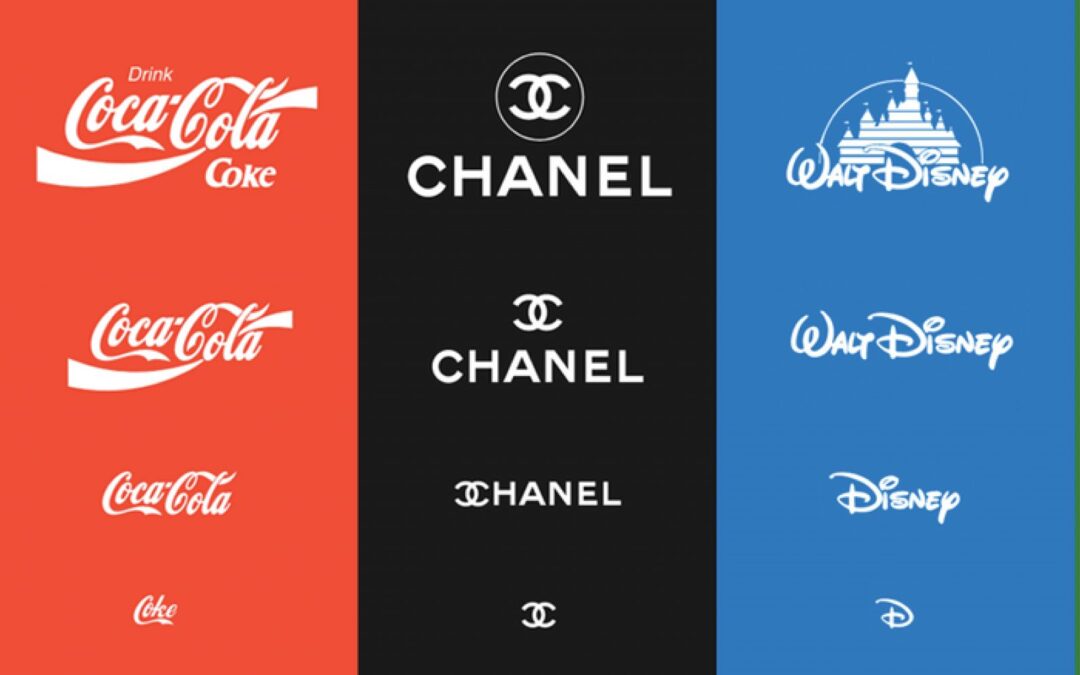
An adaptable logo is a visual representation of a brand that can be easily adjusted to work across different mediums, formats, and applications without losing its core identity or essence. It is designed to maintain a consistent look and feel across various marketing materials such as print, digital and social media. An adaptable logo can be resized, repositioned, or modified to suit different contexts, but it retains the same essential design elements that make it instantly recognizable as the brand’s logo. The goal of an adaptable logo is to ensure that the brand’s messaging is cohesive and memorable across all channels, while also allowing for flexibility and versatility in different marketing contexts.
Why you should be creating adaptable logos
Real estate businesses targeting Gen Z need to consider the importance of an adaptable logo for several reasons.
Easily sharable
An adaptable logo is shareable. In today’s digital age, social media platforms are a crucial part of any marketing strategy, and Gen Z is known for their love of sharing content. An adaptable logo that looks great on various platforms can help attract attention and increase shares, ultimately driving engagement and awareness.
Branding
Cohesive branding is key. Gen Z is highly skeptical of businesses that lack authenticity or appear to be inauthentic. An adaptable logo that maintains the same look and feel across all marketing materials can help establish a consistent and authentic brand image that resonates. Since this generation values authenticity and creativity, a logo that reflects those values will be more likely to capture their attention and earn their trust in the long run.
Integration
Seamless integration matters. As a tech-savvy generation, Gen Z expects businesses to have a strong online presence.
An adaptable logo that can be easily integrated into a website, a phone app, social media profiles, and other digital marketing channels ensures that the brand’s messaging is consistent across all channels, making it easier for them to recognize and engage with the brand.
Trust and awareness
A recognizable logo builds trust. For Gen Z, trust is a key factor in making purchase decisions. A recognizable logo that appears across different mediums and formats helps build brand awareness and establishes that trust, leading to increased customer loyalty and retention.
Forward-thinking
“Future-proofing” is essential. As a forward-thinking generation, Gen Z expects businesses to be proactive in adapting to new technologies and mediums.
An adaptable logo that can easily be updated to remain relevant in the ever-changing marketing landscape demonstrates a business’s commitment to innovation and staying ahead of the curve. Since they tend to stay on top of trends, Gen Z is quick to spot dated marketing and graphics.
To conclude
An adaptable logo is very crucial for real estate businesses targeting Gen Z. By having a logo that is versatile, consistent, recognizable, and “future-proof”, real estate businesses can attract and retain the loyalty of Gen Z customers in a highly competitive market.
As a result, they can establish a strong and authentic brand image that resonates with this influential audience, leading to increased brand awareness, engagement, and customer loyalty.
Before you go
Don’t forget, we’re experts when it comes to crafting marketing strategies that drive leasing results and building high-ranking SEO-friendly custom websites! Need help? Reach out to a CSM or any of our team members to get started on taking your marketing and SEO to the next level, see an increase in traffic, and watch the leads roll in.
For more tips and information about digital and real estate marketing, take a look at the rest of our blogs, right here on our website! You can also subscribe to our email newsletter, or follow us on Instagram, Facebook, or LinkedIn!
About the author
Mai is something of a superstar here at Threshold. Working exclusively as our Senior Designer, there is nothing she can’t create flawlessly for our clients, and our own TH brand. At the end of the day, our creative THeam would not be the same without her leading the way both in her ability to bring dreams to life, and her strategy behind it all.
When she’s not on the clock, Mai loves keeping her creative juices flowing by acting as a maker in her hobbies. From refinishing furniture to creating her own art, her mind is always fueling itself with brilliance and taste. She only wishes she had more time in her days to continue doing more of what she loves.