
by threshold | Dec 7, 2020 | Digital Marketing, Marketing, Tech/Web
There are a lot of best practices you can gather about digital apartment marketing before you ever launch your own campaigns. But the best campaigns are built on the foundation of testing and optimization. No two markets are exactly the same, so to learn what works for your real estate brand, you have to be willing to try, fail, and learn along the way. Luckily, A/B testing—AKA split testing—is a tried-and-true practice among marketers, and it’s built into many of the most popular advertising platforms. Plus, when done strategically, it saves you much more money than it costs, making it a no-brainer for most real estate marketing agencies and in-house apartment marketers.
So what exactly is A/B testing, how does it work, and how should you employ it for your apartment marketing campaigns? We’ll answer all that and more below.
What is A/B Testing?
A/B testing is a type of split testing in which two versions of a marketing element are run simultaneously to determine which performs better. For example, if you take an existing ad for your property, but swap out the headline for a new one, then run both the new and the old version at the same time (i.e. version A and version B) to see whether the new or the old headline earns better results, that’s an A/B test. While split testing refers to a test with more than one version, A/B testing is simply the term for a split test using exactly two versions. However, the term A/B testing has become so ubiquitous you might hear it used synonymously with “split testing.” In any case, the basic methodology is the same whether you’re using two versions or more.
Ad headlines aren’t the only thing you might A/B test. Email subject lines, landing pages, CTAs, and lots more can be A/B tested to fine-tune your approach to apartment marketing for your real estate brand.

Why is A/B Testing Important for Apartment Marketing?
We said it earlier, but it bears repeating: no two real estate markets are exactly the same. Your audience of potential residents might respond to one headline while another audience might ignore it. And while you might land on a decent marketing strategy by following best practices and common sense alone, you could be missing out on a lot of optimization if you never test your approach.
When real estate brands employ A/B testing, they give themselves the opportunity to understand how to put their marketing dollars toward the most cost-effective outcomes. For example, you might find that advertising “Get 2 Months Rent FREE” performs better than “Get Half-Off Rent for 4 Months,” earning you more leases even though the rent concession costs you just as much no matter how you phrase it. A/B testing can amplify—sometimes dramatically—the effectiveness of the same basic marketing campaign, simply by tweaking the messaging you use, the color of a CTA button, the header at the top of your landing page, or the subject line of your email.
How To Do A/B Testing for Apartment Marketing
Before you start A/B testing, though, it’s important to know some basic dos and don’ts. Otherwise, you can easily get results that are skewed, confusing, or just not very useful. There are a few essentials to keep in mind when setting up an A/B test.
First, it’s important that you pick only ONE variable to test at a time. If you run a version of a display ad with a different headline AND different photo selection, you won’t know whether the difference in performance is due to the headline messaging or the photo selection. Unclear results like this make it challenging to use what you’ve learned to optimize your results. While it can be tempting to test everything all at once in the hopes of expediting the learning process, you’ll actually slow yourself down because you’ll have to wade through unclear results that don’t offer actionable takeaways.
Secondly, it’s important that you split your sample groups evenly and randomly. Doing so ensures that one version’s higher performance isn’t simply due to it having more opportunity to excel than the other. For example, if one landing page is shown to prospects who have visited your site already and another version is shown to new visitors, you won’t know whether the difference in performance is due to the audience it was shown to or due to the landing page design itself. Randomizing and evenly segmenting the users who see version A vs. version B helps ensure that you can confidently attribute differences to the variable being tested and NOT to any variables that are not being tested.
On a similar note, avoid jumping to conclusions until versions A and B have both been shown to a good sample size. The sample size sufficient to draw reasonable insights can vary based on your goals and what’s being tested, but in general, the larger your sample size, the more confidently your can draw your conclusions and apply your learnings.
Finally, understand your KPIs (Key Performance Indicators) before you start testing. Since there will likely be a variety of measurable differences among factors like CTR, impressions, time spent on page, percentage of new website visits, open rates, and so on, it’s important that you know which are most important in measuring success. For example, if what you want is more traffic to your site, measuring CTRs and new visitors to the site (through Google Analytics) are your key metrics to look at. If what you want is to raise awareness, impressions and views may be more important barometers of your success.
by threshold | Nov 10, 2020 | Creative, Design, Digital Marketing, General, Marketing, Thought Leadership
From apartment Facebook ads to banner ads through Google, display ads often play a central role in a real estate brand’s digital marketing mix. Since we’re a full-service apartment marketing agency here at Threshold, that means we’ve spent a lot of time perfecting our understanding of the design, messaging, and other elements that contribute to effect display ads for apartment marketing campaigns. Today, we’re passing on our must-know tips for real estate display ads.
This article will cover tips for design and messaging dos and don’ts for real estate display ads; it will NOT cover tips for how to target your ads through the various advertising platforms that support display ads (Google Ads, Facebook, Instagram, and so on). If you’re interested in a post of ad targeting tips, let us know by dropping us a line on our contact page or sending us a message on Instagram!
Keep Copy Short and Descriptive for Apartment Display Ads
When your apartment community has so much to offer, it can be challenging to keep your ad messaging short! But there are a number of reasons why it’s essential to stay brief. The primary reason is that short copy is just more effective. Users typically encounter display ads as they go about their normal online lives, and as a result, they have precious little attention to devote to your ad. Ensuring that your ad message can be parsed quickly and effortlessly is essential if you want to work within this limited attention span to reach your qualified audience and earn their clicks.
Speaking of limited attention, copy-heavy ads can crowd out more engaging elements of ad design. Data show that ads with high-quality images and video earn far more clicks and engagements than ads without these features. When you crowd your visuals with copy, you compromise the ability of the visuals to drive this performance boost.
Not only that, but the more copy you include, the less legible your message is likely to be, especially when dealing with smaller ad sizes. Keeping your message short ensures that the copy will be legible across a wide variety of devices and ad placements.
Some platforms even restrict the amount of copy you’re allowed to have on a display ad. When it comes to apartment Facebook ads, for example, apartment marketers have long been working with a restriction called the “20% rule,” which restricted the use of ad images with text on more than 20% of the image. In 2020, Facebook announced that they would be removing this rule, but still recommend that you follow the 20% guideline, as ads with less copy tend to see better results on their platform.

A Facebook display ad following the 20% rule
So, given the limited room for ad messaging, what makes for effective real estate ad copy? Most importantly, you need to provide just enough information that it’s clear what the ad is for. Remember, the user is only devoting a few seconds at most to reading your ad, so it needs to be immediately obvious what’s being advertised or you’ll lose out on the people in the audience who might actually be interested to learn more. A headline of about 3 to 5 words (or around 30 characters) is usually best. For example, “Apartments Near UMD” or “Special Rates on Austin Apartments” get to the point quickly and clearly communicate the important information that a user needs to know in order to determine if this offer is relevant to them. You have more flexibility with copy length on certain ad sizes (for example, banner ads can incorporate slightly more copy), but in general, the shorter the better, especially if you want users to click through.
As long as you’ve mastered the short and sweet headline, you may be able to drive more qualified clicks by getting as specific as you can in the space available. For example, if the ad size is large enough to accommodate it, a subheader listing the available floor plan types or a “starting at” price may be beneficial. Where a subheader isn’t possible, just be as specific as you can within the 30 characters or so you have in your headline.
Finally, for ads that feature a CTA Button, keep that short and sweet too. “Apply Now,” “Lease Today,” or “Learn More” works great for apartment display ads.
Use High-Quality, Visually-Engaging Property Photos
We already mentioned that high-quality visuals contribute to better ad results for real estate display ads. But what counts as high-quality? What photo composition elements make an ad visually engaging?
We have an entire article devoted to answering exactly that question, which you can find here. In short, the angle, lighting, and staging of the photo all make a difference, as does the color composition (more on color below). The image should also have a single, clear focal point. If the user isn’t sure where to look, they’re not going to waste time figuring it out, they’ll just scroll right past your ad.
If good photos or renderings aren’t available, lifestyle imagery may work better than using a poor-quality photo. Stock images featuring one or two smiling people who fall into your renter demographic are common options.

A retargeting ad using a lifestyle photo
Use Bold Colors and High Contrast When Designing Your Real Estate Display Ads
Use bright colors to draw consumer attention to your ad. This is especially important with call-outs and buttons, which should be contrasting colors for high visibility. This doesn’t mean your ad should be garish; a little knowledge of complementing colors can go a long way when you want to use bold colors while still being easy on the eyes. For example, if you use a photo for your banner ad with a blue sky background consider an orange button and orange action text.
Bear in mind, though, that your branding should be consistent between your display ads and the landing page the ad links to, so use brand colors as a starting point. Ensuring that your apartment’s display ads make use of your brand’s colors and fonts make the ad’s look and feel consistent with the website. This also avoids confusing users by making them think they clicked on the wrong link.

A banner ad using contrasting colors
Tailor Ad Sizes To the Type of Apartment Display Ad Campaign You’re Running
Some ad sizes statistically perform better than others, but your choice of which ad size(s) to use for your apartment display ad campaign may be more complicated than it appears at first glance. That’s because different ad sizes are better for different goals.
For example, if your goal is to maximize impressions, ads that are 300×250 or 728×90 pixels may be your best bet. However, if your goal is to earn clicks, the highest-performing ad sizes tend to be 336×280 and 300×600 pixels. Let’s break that down a little further. That means that if you’re running an awareness campaign, where impressions are a more important factor, the 300×250 and 728×90 ad sizes may suit you perfectly. However, if you’re hoping to drive immediate leasing results, you need people to actually click through. In this case, 336×280 or 300×600 may be your better choice.

A 728×90 Retargeting Banner Ad
Your best sizing choice may further vary depending on what type of campaign you’re running. For example, smaller ad sizes for retargeting campaigns may work better because the user is already somewhat familiar with your brand and the ad can help you stay top-of-mind no matter how small it is. But for new traffic or lead gen campaigns, larger ad sizes give you a better opportunity to showcase why a user should bother to learn more. The ad size you choose may also depend on the message you need to deliver. If you need more room to accommodate a longer message (say, a special rate on specific floor plans), then a 728×90 banner ad like the one pictured above may work well.
Those are all our top tips for creating effective display ads for apartment marketing campaigns! If you have more questions, don’t hesitate to reach out to our team! We’re always happy to talk digital marketing strategy.
by threshold | Oct 20, 2020 | Creative, Digital Marketing, Marketing, Thought Leadership
Believe it or not, email is still one of the most effective ways to nurture leads. Though the digital landscape has evolved dramatically, folks across all age groups still use email every single day—for many, it’s the first thing they do after waking up.
Not only is email marketing a reliable way to reach your audience, it’s also a powerful strategy for relationship building with prospects and current residents alike. It particularly excels as a retargeting strategy, keeping your property top-of-mind at various stages of a prospect’s housing search or reminding a current resident of all the reasons to renew. But the best part of all is that it’s one of the most cost-effective strategies you can incorporate into your real estate marketing plan. That’s why the right email marketing strategy can make a major impact on your real estate marketing goals. Let’s talk about some of the top strategies you can employ to get better email marketing results.
Always Begin With “WIIFM”
In other words, “What’s in it for me?” Especially in our busy day-to-day lives, people need to feel confident that your email has something to offer them. If it’s a waste of their time and attention, it could do more harm than good as they form their impression of your brand. So avoid waxing poetical about your brand or providing unnecessary information. All the info you include, every link to another page, and every element of the design should provide some clear value to the user on the other end. Remember, it’s not about you, the brand, it’s about the bridge you create between your brand and the user.
Personalize Emails Whenever Possible
People appreciate a personal touch, especially when they get so many emails every day that are sent to a mass audience. Where you choose to live is one of the most personal decisions you can make, so prospects and residents shouldn’t feel like they’re just a faceless number in your leasing pipeline. When you can, personalize emails with a salutation using their first name or, if applicable, a reference to content from their previous email. Touches like these show your audience that they’re seen as individuals, even in cases where you don’t know anything about them yet.
Send Regularly, But Not Too Often
Whether you’re following up with prospects or communicating with current tenants, you need to show you care without becoming a nuisance. Bear in mind that most people get many emails every day and are likely to ignore, archive, or delete emails that arrive so often they become spammy. Sending an email once a week is typically the maximum you should aim for, while once per month is about the minimum.
There are exceptions, of course. When communicating about a time-sensitive issue like community-wide repairs and renovations or following up on a prospect’s email, don’t worry about the frequency of your sends. These should be considered ad hoc emails rather than a part of your regular email marketing cadence.
When it comes to your marketing-focused emails, planning ahead will help you ensure you’re getting the message out without sending emails so often that it becomes spammy. It will also help you plan ahead to for marketing campaigns appropriate to your seasonality. For example, you might plan a renewal campaign in the months leading up to what’s traditionally your slow season, or you might plan an email advertising holiday deals for new leases to go out in mid December.

Improve Open Rates with Better Subject Lines
Even a stellar email design can be useless if the email is never opened. The most influential factor determining whether a user opens your email is the subject line. In order to encourage email opens, it’s essential that you provide compelling info toward the beginning so that the important stuff isn’t cut off based on the size of your user’s screen and inbox layout. Other tried-and-true strategies include using a number (Save $500 By Referring a Friend), including an emoji (Immediate move-ins available on 1-bedrooms😲), including a first name (Hi, Chad, thanks for reaching out!) or posing a question (Have you seen our pet-friendly amenities?).
Improve Click-Through-Rates By Leaving Room for Curiosity
When your goal is to get users to visit a web page, it’s best to leave them guessing. Provide just enough information to entice them without providing the whole story. This way you’ll have convinced them there’s something they want on the other side, but they have to click through to get it.
For example, say you’re running a special on certain floor plans and you want to direct users to your floor plan page where they can see specials, explore floor plans, and hopefully begin an application. You might leave room for curiosity by saying something like, “Get 4 weeks FREE on select 1-Bedrooms! This and other great incentives are available for a limited time. Visit our website to learn more and see if you can snag the perfect deal for you.”
Improve Click-Through-Rates With a Clear CTA

Since the point of email marketing is typically to drive your audience toward specific actions (visiting a webpage, starting the renewal process, completing an application, scheduling a tour, etc.), it’s important to make that desired action clear. The clearest way to signal this information to your audience is through the use of Call-To-Action (CTA) buttons that stand out from the rest of the email.
Keep the copy on your CTA buttons short and to-the-point; it should be clear, when clicking, what the outcome will be (no one appreciates a bait-and-switch). For example, “Apply Now” should take users to a page where they can start an application. “See Floor Plans” should take users to your floor plans page. A “Learn More” button beneath a headline about specials should take a user to a page that contains more information about your specials. It’s pretty straightforward; just bear in mind that the goal is to match up a user’s motivation when clicking to the outcome they actually get on the other side. Otherwise, they’re likely to bounce without ever completing the desired action. And that experience may even sour them to your brand moving forward.
Make Copy Easier to Skim
Even when you have a lot to say, keeping things brief is the best way to ensure your audience actually digests the information you provide. So keep things short, whether it’s your subject line, headers, paragraphs, or CTA copy. The easier an email is to scan, the more likely your audience is to interact with that email and ultimately take the desired action instead of becoming bored or frustrated and moving on with their busy day. Other elements that can make copy more scannable is the selective use of font weight, color, and size to emphasize which parts are most important. We’ve done that in this blog post, for example.
Use Simple, Branded Email Designs
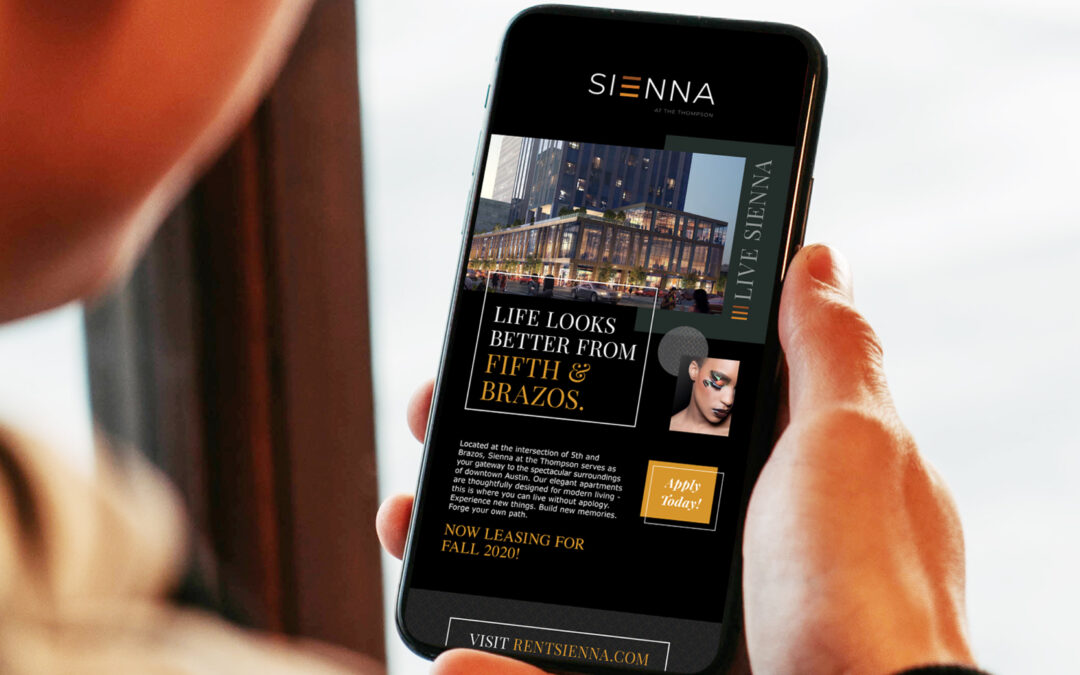
An email doesn’t have to be stunningly designed to be effective, but it should follow the basic principles of UX. That means a design that provides a clear hierarchy of information, appears legibly on all devices (more on that below), and uses a color palette that’s easy on the eyes. Your emails should also consistently use elements of your branding, including your logo, brand colors, and brand voice so that users know exactly what sort of email they’re looking at as soon as they open it, and any users who receive multiple emails from you begin constructing a consistent impression of your brand, building familiarity and hopefully even loyalty.
Since creating excellent email designs can be time-consuming, creating a number of templates can be especially useful. This way you empower your team to do more with email marketing without an exorbitant amount of work needed to make it happen day-to-day.
Use Mobile-Friendly Designs
Bear in mind that, these days, most users will be checking their email on their phone. That’s especially true during the morning and evening hours. So designing an email that looks great on desktop but terrible on a mobile device will likely result in poor click-through-rates and conversions. That’s why we recommend designing emails for mobile first instead of designing for desktop, then trying to translate that design into a mobile version.
Consider Time-of-Send
The day of the week and time of day can have a significant impact on open rates and CTR. Understand your target audience’s typical day-to-day, then schedule your email sends to go out when folks are most likely to open and click through.
There are a number of philosophies regarding the best time to send out an email. Some like to reach audiences right when they’re waking up in the morning so that their email is at the top of their inbox when they start checking emails. Others find that sending over the lunch hour or as work is wrapping up for the day to be the best time to command the attention of otherwise busy prospects. And different audiences will have different daily routines; for example, consider the different lifestyles of student versus multifamily versus senior housing residents.
The best way to select your time of send is to test the waters. A/B testing is a particularly powerful option to determine what the best time of send may be for your overall audience. Over time, you can learn what times of day result in the most opens and clicks among your audience and then send at those times moving forward.
Build Email Lists With Lead Gen Campaigns and Contact Us Forms

Collecting the email addresses of current residents is easy enough, but building an email list of prospects is harder. While it may be tempting to buy a contact list to expand your email marketing reach, this is a particularly poor strategy for apartment marketers because it mostly results in a list full of unqualified prospects who will ignore or unsubscribe from your emails. They’ll also likely report your emails as spam, which can impact the performance of your email marketing down the road.
So we recommend gathering your contacts list the old fashioned way. The primary way that apartment communities tend to collect email addresses is through contact form fills on their website, but that strategy tends to capture folks later in their buyer journey, when they’ve already entered the consideration phase. Adding other strategies that can collect email addresses from folks earlier in their journey can help bring more prospects into your lead nurturing funnel, where you really have the ability to wow them. Facebook Lead Gen campaigns are one way to capture email addresses from people who have visited your website or searched for housing, but wouldn’t necessarily have reached out to contact you.
Just don’t forget, people are used to getting lots of spam in their inbox, and may feel hesitant to give out their email address. Clearly demonstrating what’s in it for them (i.e. providing clear value) will make them more likely to go through with handing over the keys to their inbox.

by threshold | Oct 13, 2020 | Culture, Marketing, Tech/Web
Updated 9/8/21
With the oldest representatives of Gen Z now 24 years old, this generation has already redefined the student housing market and is well on its way to doing the same for multifamily. As their coming of age continues to change the student housing and multifamily industries, here’s what you should know if you want to remain at the cutting edge of the industry and future-proof your marketing strategy. We’ll break down who Gen Z is, what motivates Gen Z’s housing choices, and how to market housing to Gen Z. Let’s dive in.
Who Is Gen Z?
First of all, let’s nail down some definitions. Although from a practical standpoint, generational boundaries are more of a guideline, the official birth years for Gen Z fall between 1997 and 2012. That means as of 2021, the oldest Gen Zers (or “Zoomers”) are now 24 years old. As a result, many Gen Zers are now becoming first-time renters in both the student housing and multi-family markets, and within the next decade, the entire generation will be 18 or older.
Besides their years of birth, Gen Z is defined by the digital and cultural trends that formed (and continue to inform) the zeitgeist of their formative years. This generation is dominated by digital natives—i.e. people who have not only never experienced a time without the internet, but who grew up using smartphones, social media, and other digital technologies and platforms. They are on track to be the most educated generation on average and tend to be socially conscious and climate conscious.
In terms of their values, Gen Z is considered to be similar to Millennials but antithetical to the Boomer generation. Many Gen Zers appear to reject the traditional values of the Boomer generation: for example, Gen Z is less likely to value buying a home, marrying young (or marrying at all), having children, achieving traditional career success, or conforming to traditionally-defined gender roles.
What Motivates Gen Z?
Gen Z’s digital and social sensibilities define their key motivations within the housing market. For example, it should come as no surprise that, even more than Millennials, the digital natives of Gen Z are motivated by smart home tech, access to high-speed internet, and a property’s digital presence. They prefer having the ability to learn about a property online without first having to visit in person and expect online options for lease applications, rent payments, and maintenance requests. In a similar vein, this group—accustomed to having so much of their life at their literal fingertips—appreciates convenience and will choose housing options that cater to it.
Beyond their digital expectations, Gen Z is also highly motivated by affordability. As this generation enters the market during one of America’s most staggering recessions, when tuition costs are higher than ever, and job security is hard to come by, they know they have to be frugal and cautious. For similar reasons, this generation values flexibility and efficiency. They want to get what they need without paying for extra; they want low utility costs and high value, and they want the freedom to change their housing when their needs change, especially during a time of instability.
Additionally, this climate-conscious generation is motivated by sustainability. They are early adopters of sustainable alternatives to everyday goods and services and likely to appreciate brands that they see as contributing to climate solutions rather than to climate problems.
How is Gen Z Changing the Housing Market?
As Gen Z enters the renting market, many developers and property management companies are beginning to see what is most important to these renters as well as what are some of the deal-breakers.
We’ve already seen a shift to online rent payment options, online leasing, and virtual tours. In addition to these changes, we’re beginning to see an incorporation of more smart-home technologies with new developments and upgrades to existing apartments. These changes speak to some of the shared values placed on digital convenience and tech-savvy by Gen Z and Millennials. While the latter have been shaping housing trends for over a decade, Gen Z will likely push these trends even further. In particular, smart-home technologies with phone compatibility are likely to be the next wave of upgrades. Some of the amenities we’re beginning to see in this area include:
- Smart thermostats
- Smart door locks and keyless entry (for apartments and amenity spaces)
- Package lockers
- Smart speakers (often given as leasing incentives)
- Smart lights
- Smart appliances
- App-based amenity reservation system
On the subject of sustainability, many developers are setting new standards with LEED certification. Since Gen Z values contributing to efforts that protect the environment, we may see an increase in LEED certified buildings and the marketing around these certifications to appeal to the interests of Gen Z renters. Other features and amenities we’re beginning to see in this area include:
- Vehicle recharging stations
- LED lighting
- On-site renewable energy
- Recycling options
- Daylighting
- High-efficiency appliances
- Community gardens
Another interesting trend that could emerge is co-living. While it’s still a niche industry, co-living may appeal to the convenience and affordability motivators for Gen Z. Younger renters are accustomed to and actively seek out living with a roommate. The housing affordability crisis of today may even motivate Gen Z renters to seek out co-living options in spite of the COVID-19 pandemic and any lingering cultural shift it may create.
How To Market Apartments to Gen Z
Whether you’re marketing student housing or multifamily apartments, appealing to a Gen Z audience requires more than just running some ads on Instagram or creating a TikTok for your property. While most apartment marketers and asset managers already know that social media presence is a must when marketing to Zoomers, there are additional factors you should take into account.
Branding & Positioning for Gen Z
Gen Z likes to see authenticity, social impact awareness, sustainability, and modernity from their brands, and apartments are no exception. For new developments, it’s easier to steer your branding in this direction, but for existing communities, it can be a challenge to adapt to these preferences after the fact. Consider drafting new brand messaging guidelines for everything from your social media posts to your website and ad copy, then update these digital assets accordingly. Gen Z can smell inauthenticity a mile away, so brand voices that are conversational, approachable, and down-to-earth tend to resonate better with this crowd. And after all, there’s something inherently appealing about a brand that appears to “cut through the bullshit” and deliver straightforward facts. While some existing brands can achieve this with just some well-placed tweaks, in some cases, a full rebrand could be the glow-up your community needs to attract Gen Z renters.
Gen Z also tends to prefer a brand look & feel that is colorful, playful, and simple. In general, think organic shapes, minimalist composition, and hand-drawn patterns and textures. By contrast, the ultra-luxe look & feel of metallic accents, moody lighting, and elegant or crisp lines don’t tend to play as well with this audience. That’s not a hard and fast rule though, so consider which of these elements, if any, will play well with your interior design and existing branding.
Digital Marketing for Gen Z
You already know that a social media presence and social media ads are a must for Gen Zers. To maximize your impact on these platforms, video is a must. TikTok videos, Instagram reels, and Instagram Stories are excellent ways to give quick video tours of your floor plans, show off resident events, introduce your on-site team members, and more.
In addition to these platforms, your website and Google My Business page are also key to earning leads and leases from Gen Z renters. You don’t have to have the fanciest website, but a modern feel with solid UX (including, at a bare minimum, no broken links) can go a long way. That goes double for a GMB page with updated info, a working link to your website, attractive community photos, and positive reviews.
And because most housing searches begin with a Google search, especially among the digital natives of Gen Z, Search Ads are a must if you want to reach your prospects when they are most ready to click and convert.

by threshold | Oct 6, 2020 | Digital Marketing, Marketing
Wondering why you should work with a digital marketing agency instead of managing digital campaigns yourself? We get this question occasionally, and we understand why. Especially for brands with modest digital marketing budgets, managing your own digital campaigns may seem like a desirable option. After all, with enough diligence and marketing know-how, it’s possible to move the needle by relying solely on your own in-house marketers.
However, for most real estate brands, we recommend partnering with a dedicated real estate marketing agency for digital marketing campaigns, and there are a few key reasons why. Due to a variety of factors, most brands find they get a better value for their spend by relying on industry experts who have the resources and skills to launch impactful campaigns from day one, track their performance carefully with an eye toward the most relevant KPIs for your goals, and then continually optimize for best performance based on learnings, growth, and seasonality. The key is to find a digital marketing agency with no long-term contracts so that you retain control over your digital marketing costs and can pull the ripcord if things aren’t working out. That said, when you choose a partner with expertise specifically in the real estate market, the results will likely exceed what you’d accomplish in-house, resulting in positive ROI. If you’re wondering why, here are just a few of the reasons our clients see better results after partnering with us.
They’ve Mastered The Art of Digital Marketing for Real Estate
When you work with a dedicated real estate marketing agency, you’re paying for expertise, and that expertise pays you back. A real estate marketing agency has the advantage of immersing itself in the ins and outs of your real estate market, staying on top of industry trends, and understanding your target audience. Not only that, but they also have the aggregate learnings of hundreds if not thousands of digital campaigns and market surveys already informing their strategy. There’s just no substitute for the sheer volume of experience you’ll be leveraging when you partner with a digital real estate marketing agency.
And digital marketing for real estate truly is an art. With so many marketing tactics to choose from, platforms to familiarize yourself with, potential messaging and design strategies, user behaviors to understand, and so many other factors, there’s no single, simple way to determine the best strategy for you. It takes a lot of insight, tenacity, and attention to form a strong digital marketing strategy for your needs within your market, and many brands find they simply don’t have the bandwidth to devote to those demands.
See more reasons why an agency with the right experience is crucial to your real estate marketing plan.
They Have Access to Digital Marketing Tools & Resources You Don’t Have
Partnering with a real estate marketing agency also means getting cutting edge tools you wouldn’t normally have access to. For example, platforms like Facebook and Google have programs for preferred partners that may provide access to new features in beta (i.e. before those features go live for a wider audience) like Smart Campaigns, Google Lead Generation, and more. But not everyone can become a Google Premier Partner or a Facebook Certified Partner, so working on your own, you might miss out on campaign options that could be driving better results for your specific needs.
Not only that, but with a direct line to dedicated representatives for these major advertising platforms, campaigns run by preferred partners of Google and Facebook enjoy extra support to ensure they’re set up for success and able to take full advantage of the options available. And a little extra support can go a long way, since advertising policies and tools on these platforms are constantly changing. An expert digital marketing partner helps you stay up-to-date on all the algorithm, feature, and policy changes and ensure you’re not violating any policies that might result in paused campaigns or compromised results.
They Know How To Track Digital Marketing Campaigns & Optimize Performance

Launching a digital campaign is just half the journey when it comes to digital marketing. In order to make the most of your digital campaigns and get the results you need, it’s essential to know how to track and optimize against your most relevant KPIs (Key Performance Indicators). There’s a lot that can be tracked in Google Ads, Facebook, and other platforms, and each KPI tells you something different about user behavior and campaign success. Knowing how to interpret the data (and ensure it’s being collected accurately) is indispensable to successful digital marketing for apartments. Beyond that, any digital marketing partner worth its salt will have access to and experience using tools and resources that allow them to forecast, budget, and optimize campaigns so that you’re not just getting campaigns up and running, you’re seeing them pay off with the right results at the right times and for the right cost.
It Frees Up Your In-House Teams To Focus On Closing The Deal

Especially when it comes to property management, we’re constantly blown away by how much our clients take on day-to-day. Chances are, you’ve got plenty to worry about already, and could use some extra bandwidth to focus on where you can make the biggest impact. When you partner with a digital marketing agency for apartment marketing, it allows you to zero in on the decision phase of a renter’s journey without also worrying about how to build awareness, command attention, and generate leads. In other words, you can focus on nurturing the leads that come in, wowing prospects with great staff interactions, and ultimately closing the deal, all of which is essential to your overall marketing success. Freeing up your in-house teams to focus on these aspects more attentively enhances your marketing and reduces lead drop-off within your sales funnel.
Learn more about the renter’s Digital Buyer Journey.

by threshold | Sep 22, 2020 | Creative, Design, Digital Marketing, Marketing, Tech/Web, Thought Leadership
Every good digital marketing plan for real estate must take into account the user experience on property websites. After all, a digital ad is only as good as the landing page it directs to, and a bad first impression can destroy your chances with a prospect. Real estate marketers today know they need to provide a great user experience on property websites, but they aren’t always sure how to improve UX or use strong UX design from the beginning.
If this sounds like you, don’t worry, we’re going to go through some UX tips for apartment websites. These tips range from quick fixes to broader strategies, but every one of them will help you build websites that meet user’s needs and encourage them to take the actions that are important for your bottom line.
Study User Behavior
First and foremost, you need to understand your users. Not just users in general, but your users; your audience’s browsing habits, goals, needs, motivators, and preferences. Each market is different and so is each person, but a few strategies can help you discover broad habits that your site should cater towards, like what information is important to your users and what device they usually use to search for housing or access your resident portal.
Conduct a Focus Group
A focus group survey can help you understand a lot about your audience. While the best focus groups require diligent survey design, the payoff can be massive.
When conducting focus groups, make sure to get as representative a sample as possible for your city, university, or age group. You might want to offer an incentive to attract more participants—for example, with a chance to win a gift card once the survey has been completed.
Avoid asking leading questions or limiting the answers your respondents can give. Keeping things open-ended is the best way to ensure you learn something you didn’t already know (or assume).
Use Scrollmaps
Scrollmaps are a tool you can use to study user behavior on a site that already exists. It shows you where users tend to linger on a page, where they tend to click, and which areas fail to hold their attention. This is a particularly useful tool if you want to identify areas for improvement on a website you’ve already built.
Scrollmaps can’t provide a full picture, however, because they don’t show you what your users would be doing if things were different. They can only show you what they are or aren’t doing right now. In other words, they’re better at identifying problems than solutions. Still, they can be a great place to start.
Study Your Google Analytics
For more insights into user behavior on already existing sites, Google Analytics is a fantastic resource. It allows you to see which pages have the highest bounce rate or lowest time spent on-page, which pages are most viewed and which are rarely seen. These insights can help you identify sections of your site that need improvement. Combined with the use of scrollmaps, this strategy can give you a lot of information about your current UX without having to ask users directly.
Consider Your Mobile User Experience

While many users’ housing searches take place primarily online, mobile phones and tablets still represent a significant portion of the traffic to your property website. In fact, a user is especially likely to encounter your property website on their phone during the discovery phase, when they’re forming their initial opinions and deciding which properties will move forward into their consideration phase. This means having a responsive website—one that’s optimized for a variety of screen sizes—is essential in making a good first impression.
If you’re not sure how to turn a website design that’s optimized for desktop into one that works on mobile, here are a few basic guidelines.
When it comes to website design for mobile:
- Stack content vertically instead of horizontally
- Use image carousels instead of images arranged in a grid pattern
- Implement expandable elements so users can expand and collapse information as they desire
- Use an expandable “hamburger” navigation menu that remains out-of-the-way when not in use
Address Long Loading Times
Nothing contributes to high bounce rates more than a slow load time. That’s because a slowly-loading page makes for a terrible user experience in a world grown accustomed to lightning-fast internet. Users just don’t have the time or patience to wait for your site to load, especially when they have other options available to them.
The best way to reduce page load times is to be aware of the common culprits—namely, video and images. When you have several large image or video files on a page, it takes much longer to load, even on the best internet available today. It’s best to keep each image or video under 500KB wherever possible.
That’s not your only option, though. Sometimes, you might need to include a large file (or several). In cases like these, you can instead defer certain elements from loading on the page until they’re needed, or until the rest of the page loads. For example, you can wait to load a video until a user scrolls to the section of the page it’s on.
Make Pages More Engaging

The longer a user spends on a page, the likelier they are to take a conversion action or become loyal to your brand. But you need to give them reasons to stick around, and that means offering a great experience while they’re there.
One of the best ways to improve website UX by making your pages more engaging is to incorporate great images and video onto as many pages as possible. Users like to have something visual to enhance their understanding of information and hold their focus.
For apartment websites, we highly recommend taking high-quality photos and video of your community and incorporating them throughout your webpages (not just on a gallery page). Virtual tours have become a must, and your homepage can be a great place to feature a professionally edited community tour video or even feature Matterports of your top floor plans.
Make Pages More Scannable
Much as website creators might want them to, users don’t read pages from start to finish. Instead, they scan pages for the information they need or content that engages their attention.
Work with user habits and not against them by making your pages easier to scan. This creates a better user experience on your property website and improves your chances of showing a user that your community is right for them.
Tips for making web pages more scannable include:
- Develop a clear hierarchy of information by using header tags, consistent font and formatting styles, and visual cues that help signal separate chunks of information (like font color, font weight, background color, and other design elements).
- Use headers that clearly signal the content they introduce (e.g. “Community Amenities” or “Amenities for an Active Lifestyle”).
- Avoid long blocks of text. Break up text into sections of about 100 words or less.
- Avoid repetition. Repetitiveness confuses the reader about where they can find the information they’re looking for. It can also seem spammy to users and search engines alike.
- Use bullets or lists when you can (like we just did).
Make In-Demand Pages Accessible
Some pages are more important than others, and you want to make sure your users can easily find and use the pages they need the most (and the pages you most want them to use). For apartment websites, that’s typically your application portal, contact page, and resident portal. It might also be a page housing your virtual tour or floor plan availability. There are a few things you can do to make these in-demand pages more accessible.
Firstly, let’s talk about accessibility in terms of how easy it is to find. Use clear Call-To-Action buttons at the tops of pages—especially your homepage—to direct users to what they need and where you want them to go. You might also use borders and contrasting colors in your navigation menu or headers to make links to these pages clearer and more attractive.

Making pages more accessible also means making them easier to use for as many users as possible, including those with disabilities. For example, make sure you use fonts that are large enough for all users to read. You should also avoid using colors that provide poor contrast with one another, especially for text and CTA buttons.
Don’t Forget About Micro-Copy
“Micro-copy” refers to those small pieces of text that guide a user through your website, like the text on a CTA button or the error message they get when they fill out a form incorrectly. It’s easy to overlook the power of strategic micro-copy, but these are often high-impact areas that define the quality of a user’s experience in spite of their relatively small real estate.
Beyond their usefulness in guiding a user clearly through your website experience, micro-copy also offers a great opportunity to turn something generic into something that expresses your unique brand and really makes an impression on users. For example, the ubiquitous “Submit” button is boring and not all that descriptive. A button reading “Send My Message” or “Make Me a VIP” is more descriptive, personal, and flavorful.
Micro-copy applies to areas like CTAs and form fills but can also include hover copy to let a user know something is clickable and what will happen when they click (e.g. on an image or button), like in the below example.

Micro-copy also allows you to set expectations for what will happen when a user does something, which makes them far more likely to take the conversion actions you want them to take. For example, if you want the user to contact you to schedule a tour or start an application, including the text “We’ll read your message thoroughly and get back to you within 24 hours,” near the contact form gives a user the confidence that taking that action will lead to their desired result.
That’s all our tips for improving UX on apartment websites! If you want to learn more about UX or get professional assistance with your UX Design, you can do so by filling out our Contact Form. We’d love to hear from you.