by threshold | Jan 22, 2026 | Creative, Design, Digital Marketing, General, Marketing
When Deborah Hayes Advertising came to Threshold, the brief was clear: design a website for Maxwell Downtown Brooklyn that feels as refined and intentional as the building itself. Maxwell is a 40-story boutique-inspired residential tower in the heart of Brooklyn, where modern living blends creativity, community, and ease. The website needed to reflect that ethos while driving engagement and conversions.
the problem.
Luxury residential websites often feel corporate, overly dense, or disconnected from the lifestyle they promise. Maxwell required something different: a digital presence that feels curated rather than commercial, sophisticated without being stiff, and elevated yet approachable. The challenge was balancing strong visual storytelling with clarity, usability, and leasing performance across devices.
the dream.
We envisioned a website that doesn’t just show Maxwell’s lifestyle—it feels like it. Elegant without excess. Intentional without artifice. Distinctly Brooklyn. The goal was to translate Maxwell’s identity into a calm, editorial digital experience that invites exploration and mirrors the residence’s quiet confidence.
the strategy.
website design.
The visual concept was inspired by effortless sophistication—timeless, confident, and approachable. This guided a restrained visual language rooted in refined typography, a carefully curated color palette, and art-forward photography. Content pacing and generous white space allow the site to breathe, creating a calm browsing experience that reflects the building’s design sensibility.
website development.
User experience guided every technical decision. Clean navigation and a clear content hierarchy help visitors move seamlessly from residences to amenities to lifestyle storytelling. The responsive framework ensures a cohesive experience on desktop, tablet, and mobile. Interactive features—including an embedded virtual tour, refined animations, and real-time pricing and availability—engage visitors while maintaining simplicity. Strategically placed calls to action, such as Schedule a Tour and View Availability, support conversion goals and connect directly to the leasing process.
the results.
The Maxwell Downtown Brooklyn website delivers a sophisticated, user-first digital presence that reflects contemporary urban living—where modern luxury meets creativity, community, and ease. A strong conceptual foundation and meticulous execution elevate the brand while remaining intuitive and performance-driven. The work was recognized with a Gold Davey Award for Website Design, celebrating excellence in digital storytelling and user experience.
Read the full Maxwell Downtown Brooklyn website Case Study.

by threshold | Jul 10, 2024 | Creative, Design, Digital Marketing, General, Marketing, Thought Leadership

Mai Mongelous
In the world of business, marketing and branding are often used interchangeably, but they serve different purposes. While both are crucial to a company’s success, understanding their differences can help you utilize them effectively. This blog post will delve into the distinctions between marketing and branding and why each is essential for your business.
what is branding?
Branding is the process of creating a unique identity for a product, service, or company. It involves defining the company’s mission, values, and personality and how these elements are communicated to the target audience.
key components of branding:
- brand identity: This includes logos, color schemes, typography, and other visual elements that represent your brand.
- brand voice: The tone and style of communication used by the brand, whether it’s formal, friendly, witty, or authoritative.
- brand promise: The value or experience a brand promises to deliver to its customers.
- brand values: The principles and beliefs that the brand stands for and promotes.
Branding is about shaping perceptions and building a reputation. It creates a connection with the audience, fostering loyalty and trust.
what is marketing?
Marketing, on the other hand, refers to the strategies and tactics used to promote and sell products or services. It involves market research, advertising, sales strategies, and customer engagement.
key components of marketing:
- market research: Understanding the target audience, their needs, preferences, and behaviors.
- advertising: Creating campaigns to promote products or services through various channels like social media, television, print, and online ads.
- content marketing: Producing valuable and relevant content to attract and engage the target audience.
- sales strategies: Techniques used to close sales and generate revenue.
- customer engagement: Building and maintaining relationships with customers through interactions and feedback.
Marketing is about reaching out to potential customers and persuading them to choose your product or service.
key differences between marketing and branding.
purpose:
-
- branding: Focuses on defining and communicating the identity and values of the company.
- marketing: Focuses on promoting products or services to drive sales.
scope:
-
- branding: Long-term and holistic, encompassing the entire company’s ethos and image.
- marketing: Short-term and tactical, often campaign-based to achieve specific objectives.
outcome:
-
- branding: Aims to build a loyal customer base by creating a strong emotional connection.
- marketing: Aims to generate leads, increase sales, and boost market presence.
consistency:
-
- branding: Requires consistency in message and visual elements to maintain a coherent brand image.
- marketing: Can vary in message and tactics based on different campaigns and target audiences.
why both are essential.
While branding establishes your business’s identity and builds customer loyalty, marketing drives the immediate actions that result in sales. Together, they create a powerful synergy. A strong brand makes marketing efforts more effective, and effective marketing enhances brand recognition and loyalty.
By understanding and leveraging the distinct roles of marketing and branding, businesses can create a strong, recognizable presence and effectively reach their target audience.
Remember, while marketing brings in customers, branding keeps them coming back.
by threshold | Jun 6, 2024 | Creative, Design, Digital Marketing, General, Marketing
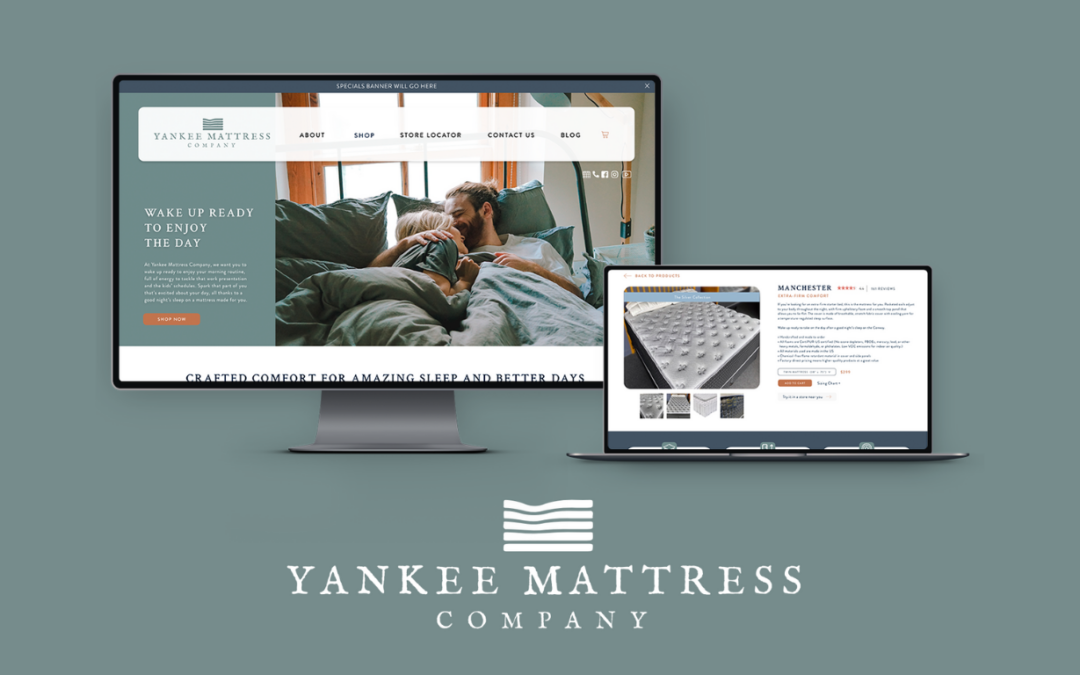
Yankee Mattress Company was looking for a revamp to its branding along with a new e-commerce website. They needed a more focused approach to their target market, with stronger messaging and values that elevated their branding to the same level as their high-quality mattresses.
Threshold wanted to position Yankee Mattress as more than a retail store, but an employee-owned company that’s invested in their customer’s quality of life.
our approach.
new brand positioning & naming.
Following extensive market and customer research, Threshold created two brand concepts for the client to choose from, both with a core purpose, messaging, tagline, brand voice, and visuals. Each concept brought the brand to a more modern place, differentiating it from competitors by highlighting the craftsmanship that goes into their mattresses.
a new brand look & feel.
The brand’s new messaging needed a new logo, brand guidelines, stationary, photography, apparel design, and more. We chose to design this brand with a logo font that spoke to handmade craftsmanship and a subtle mattress icon that would become a recognizable brand statement.
a killer e-commerce website.
Yankee Mattress’ previous website didn’t allow for a streamlined online ordering experience. Our website design included easily navigable shopping categories as well as detailed shop pages. Each mattress product page included custom graphic designs that detailed each section of the mattress materials, making it easy for customers to browse and select the mattress best suited for them.
We designed this website to mimic the in-store experience customers have, providing them with clear information so they could make informed decisions.
we love results.
The final brand not only connects better with the target audience, but it feels timeless and elevated. Each aspect of the brand ties in seamlessly with the next, inspiring the company’s employee-owners and ensuring the quality of the mattresses is felt within the quality of the branding.
One Year Post Website Launch (April 2023-March 2024):
- 446 New Users
- 7% Increase in Engagement Rate
- A 7% Reduction in Bounce Rate
before you go.
Yankee Mattress Company can now confidently say they’re crafting comfort for amazing sleep and better days. See the case study for a full look at the transformation our THeam created for them – and what we can do for you, next.
Let’s propel you forward too! Your place for your every marketing need, with us you can go a la carte or take all the carts. Talk to a Marketing Specialist today.

by threshold | Apr 24, 2024 | Creative, Culture, Design, Digital Marketing, General, Marketing, Thought Leadership
 Laura Robbins
In today’s dynamic marketplace, where consumers are bombarded with choices, establishing a distinct brand voice is paramount for standing out and building meaningful connections with your audience. Whether you’re a real estate property, a credit union, or a boutique hotel, a compelling brand identity weaves together words and emotions to convey a coherent and resonant message.
Let’s explore the art of developing a voice that aligns with your brand’s identity and strikes a chord with your target audience.
understanding your brand’s identity.
Back up, back up, back up. Before you even begin to explore your brand’s voice, you first need to ensure you’ve established your brand’s identity.
What values does your brand stand for?
What sets it apart from competitors?
What emotions do you want to evoke in your audience?
By delving into these questions, you can uncover the essence of your brand and lay the foundation for developing a distinct voice that encapsulates its personality.
Take Threshold’s brand voice for instance. One of our corporate values is that we’re both professional and playful. That value is woven throughout our voice. We like to get the job done and do an amazing job at that, and we like to have a laugh or two along the way. A witty joke or pun is welcome – and oftentimes encouraged – in these parts.
audience insight: listening to consumer needs.
Understanding your target audience is crucial for shaping your brand voice. Conduct thorough research to gain insights into your audience’s demographics, psychographics, and pain points.
What language resonates with them?
What tone elicits the desired emotional response?
Go so far as crafting personas for your brand so you can better tailor your voice and messaging to your audience. Having this distinct persona will also allow you to quality-check your brand’s messaging as it gets put into use, ensuring what you’re saying is relevant to your target audience.
maintaining your voice across touchpoints.
Remember that thing we said above, about quality-checking your brand voice? Yeah – it’s important.
Consistency is the bedrock of a strong brand voice. Maintaining a unified voice across all marketing touchpoints reinforces your brand’s identity and fosters trust with your audience. Whether it’s your website copy, social media posts, or customer support interactions, ensure that your brand voice remains consistent in tone, style, and messaging to deepen relationships with your audience.
it’s ok to be flexible.
Yeah, ok, the odd rule is meant to be broken, is it not? While consistency is essential, it’s also important to recognize that the marketplace is constantly evolving, and consumer preferences may change over time.
Your brand voice should be flexible enough to resonate with changing trends and audience dynamics. Continuously monitor feedback, stay attuned to cultural shifts, and be willing to adjust your brand voice accordingly to maintain relevance and resonance.
Threshold did just that! We underwent a brand refresh in 2023 to better align our creative direction, messaging, and services to our clients and their needs.
be yourself.
Above all, authenticity is the core of a compelling brand voice. Consumers are attracted to brands that authentically express their values and beliefs. Be genuine, transparent, and true to your brand’s identity in every communication. Authenticity not only fosters deeper connections with your audience, but also builds loyalty and advocacy over time.
to sum it all up.
By understanding your brand’s identity, listening attentively to your audience, maintaining consistency, embracing flexibility, and embodying authenticity, you can elevate your brand above the noise and leave a lasting impression on your audience.
Remember, the marriage of words and brand identity is not just about what you say, but how you say it. Let your brand voice be what captivates, inspires, and connects with your audience.
Now that you know how essential a brand voice is, let Threshold help you craft one! We use carefully curated data to deliver positioning and messaging full of strategic potential. Our experienced team weeds out stale approaches to deliver fresh perspectives and brand guidelines that empower future asset creation. And we’ll make you go wow in the process. Promise.
Get in touch with us today!
about the author.
Laura is the brand strategist here at Threshold (so when it comes to all things branding – take her word for it). She embodies all of the best part of what creative marketing is all about, bringing life to brands across the spectrum, and highlighting all of the best aspects that a company, property, business, or any other brand has to offer its consumers.
When she’s not bringing brands to life at Threshold, Laura loves spending time with her husband, son, friends, and family – and she’s even got a little one on the way! Whether it’s spending quality time with loved ones, traveling, trying new restaurants, or working on her novel (yep – she does it all), Laura is the definition of someone who lives to get all of the best things out of life, and we love her for it.